



Treatment for a B-cell acute lymphoblastic leukemia patient carrying a rare TP53 c.C275T mutation: A case report - PubMed
Source : https://pubmed.ncbi.nlm.nih.gov/36798689/
TP53 mutations are associated with poor prognosis in the vast majority of cancers. In this study, we present a pediatric B-cell acute lymphoblastic leukemia (B-ALL) patient carrying a rare TP53...
Conclusions: Our report suggests that the TP53 c.C275T mutation is associated with poor prognosis in B-ALL. Fortunately, bortezomib combined with chemotherapy could achieve a better therapeutic effect than conventional regimens in this type of ALL.
A glycolysis-related gene signatures in diffuse large B-Cell lymphoma predicts prognosis and tumor immune microenvironment
Source : https://www.frontiersin.org/articles/10.3389/fcell.2023.1070777/full
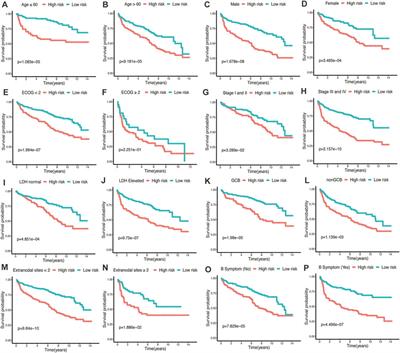
Background: Diffuse large B-cell lymphoma (DLBCL) is the most common type of lymphoma which that highly aggressive and heterogeneous. Glycolysis has been implicated in the regulation of tumor microenvironment (TME)...
Conclusions: These results suggested that the glycolytic risk model could accurately and stably predict the prognosis of patients with DLBCL and might unearth the possible explanation for the glycolysis-related poor prognosis.
-
MRD Connect3yrKey Points • Source: Frontiers in Cell and Developmental Biology • Conclusion: “These results suggested that the glycolytic risk model could accurately and stably predict the prognosis of patients with DLBCL and might unearth Show More
Identification of microtubule-associated biomarkers in diffuse large B-cell lymphoma and prognosis prediction
Source : https://www.frontiersin.org/articles/10.3389/fgene.2022.1092678/full
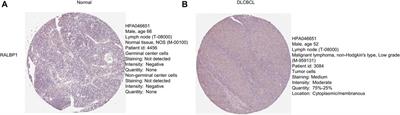
Background: Diffuse large B-cell lymphoma (DLBCL) is a genetically heterogeneous disease with a complicated prognosis. Even though various prognostic evaluations have been applied currently, they usually only use the clinical...
Conclusions: The novel MAGs prognostic model has a well predictive capability, which may as a supplement for the current assessments. Furthermore, candidate TMEM63A gene has therapeutic target potentially in DLBCL.
Case report: Successful management of a refractory double-expressor diffuse large B-cell lymphoma patient under the guidance of in vitro high-throughput drug sensitivity test
Source : https://www.frontiersin.org/articles/10.3389/fonc.2022.1079890/full
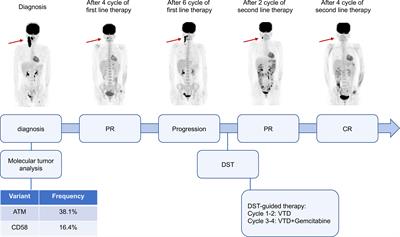
IntroductionDouble-expressor diffuse large B-cell lymphoma (DEL), harboring double expression of MYC and BCL2, has an inferior prognosis following standard first-line therapy with rituximab, cyclophosphamide, doxorubicin, vincristine, and prednisolone (R-CHOP).
Conclusions: In this article, we present a first-line chemoresistant DEL patient with ATM and CD58 mutations who was treated successfully with VTD plus gemcitabine under the guidance of in vitro high-throughput drug sensitivity test.

Cytogenetics and Molecular Genetics in Pediatric Acute Lymphoblastic Leukemia (ALL) and Its Correlation with Induction Outcomes
Source : https://www.thieme-connect.de/products/ejournals/abstract/10.1055/s-0042-1754337
CC BY-NC-ND 4.0 · South Asian J Cancer 2022; 11(04): 353-360DOI: 10.1055/s-0042-1754337 Leukemia, Lymphoma, Myeloma 1 Department of Pediatric Hematology and Oncology, Kanchi Kamakoti Childs Trust Hospital, Chennai, Tamil...
Conclusions: Cytogenetic and molecular genetic subgrouping prognosticates ALL outcomes. Although 25% of TEL–AML children had MRD positivity, larger studies are required to validate the same. End-of-induction MRD outcomes did not correlate with chromosomal aberrations.