


3yr
A glycolysis-related gene signatures in diffuse large B-Cell lymphoma predicts prognosis and tumor immune microenvironment
Source : https://www.frontiersin.org/articles/10.3389/fcell.2023.1070777/full
Background: Diffuse large B-cell lymphoma (DLBCL) is the most common type of lymphoma which that highly aggressive and heterogeneous. Glycolysis has been implicated in the regulation of tumor microenvironment (TME) and development.
Conclusions: These results suggested that the glycolytic risk model could accurately and stably predict the prognosis of patients with DLBCL and might unearth the possible explanation for the glycolysis-related poor prognosis.
• Source: Frontiers in Cell and Developmental Biology
• Conclusion: “These results suggested that the glycolytic risk model could accurately and stably predict the prognosis of patients with DLBCL and might unearth the possible explanation for the glycolysis-related poor prognosis.”
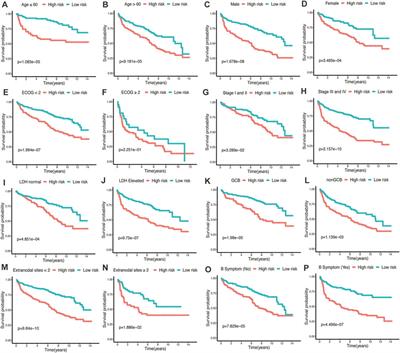
• Chinese researchers engineered a glycolysis-related prognostic gene signature in DLBCL patients and validated its prediction performance among various cohorts mined from online databases. They then assessed the tumor immune microenvironment (TIME) and immune cell infiltration at different risk levels.
• The authors wrote, “Patients in the high-risk group had significantly lower immune scores, elevated tumor purity, and poorer survival compared with those in the low-risk group. The nomogram constructed based on glycolytic risk score, age, Eastern Cooperative Oncology Group performance status (ECOG-PS), use of rituximab, and cell of origin (COO) displayed better prediction performance compared with the International Prognostic Index (IPI) in DLBCL. The glycolytic risk score was negatively correlated with the infiltration level of activated CD8 T cells, activated dendritic cells, natural killer cells, and macrophages and immune checkpoint molecules including PD-L2, CTLA4, TIM-3, TIGIT, and B7-H3.”
• Glycolysis impacts tumorigenesis and cancer development by interaction with the TIME, per the authors. In the current study, DLBCL patients with high glycolytic risk scores exhibited high tumor purities and low immune scores.
• A limitation of the current study is that the researchers used online databases and there was no experimental validation.