



Dose-escalated radiotherapy to 82 Gy for prostate cancer following insertion of a peri-rectal hydrogel spacer: 3-year outcomes from a phase II trial - Radiation Oncology
Source : https://ro-journal.biomedcentral.com/articles/10.1186/s13014-022-02103-5
Background Dose-escalation to above 80 Gy during external beam radiotherapy for localised prostate cancer leads to improved oncological outcomes but also substantially increased rectal toxicity. The aim of this study...
Conclusion/Relevance: Dose-escalation to 82 Gy, facilitated by use of a hydrogel spacer, is safe and feasible, with minimal toxicity up to 37.5 months post-treatment when compared to rates of rectal toxicity in previous dose-escalation trials up to 80 Gy. Trials with longer follow-up of oncological and functional outcomes are required to...

Metformin and testosterone replacement therapy inversely associated with hormone-associated cancers (prostate, colorectal and male breast cancers) among older White and Black men - PubMed
Source : https://pubmed.ncbi.nlm.nih.gov/35902376/
Pre-diagnostic use of metformin and TTh were, independently and jointly, inversely associated with incident prostate and colorectal cancers. The risk of HRCs was also reduced among White, Black and Other...
Conclusion: Pre-diagnostic use of metformin and TTh were, independently and jointly, inversely associated with incident prostate and colorectal cancers. The risk of HRCs was also reduced among White, Black and Other Race men. Greatest reduced associations of prostate and colorectal cancers and HRCs were mainly observed in combination of...
The rate of prostatic involvement in men treated with radical cystectomy for muscle invasive bladder cancer
Source : https://www.practicalradonc.org/article/S1879-8500(22)00193-X/fulltext
Radical cystoprostatectomy (RC) is one standard treatment for muscle-invasive bladder cancer (MIBC) in male patients. Another therapeutic option is trimodal therapy (TMT). Including the prostate in the TMT radiotherapy volume...
Conclusion: The high rate of pathological PS involvement seen in cT2 patients and the lack of ability of cT stage to predict PS involvement supports routinely treating the prostate in TMT. Patients with pre-operatively identified bladder neck/trigone tumors, urethral involvement, positive lymph nodes, or prostatic involvement are a subset at...
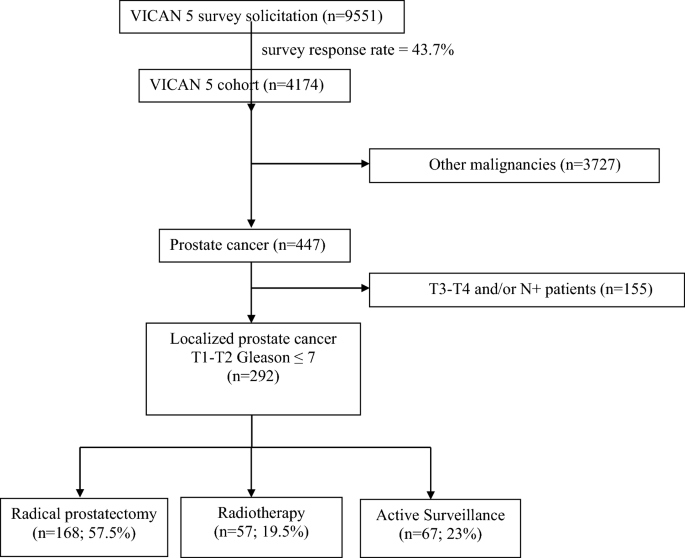
Impact of active surveillance for prostate cancer on the risk of depression and anxiety - Scientific Reports
Source : https://www.nature.com/articles/s41598-022-17224-w
Active surveillance (AS) is a standard treatment option for low risk localized prostate cancer. However, the risk of anxiety and depression compared to other curative strategies, namely radical prostatectomy (RP)...
Conclusion: Patients managed with AS for localized prostate cancer do not report more anxiety or depressive symptoms than patients managed with curative treatment, encouraging the extended use of active surveillance.

Emerging MR methods for improved diagnosis of prostate cancer by multiparametric MRI - Magnetic Resonance Materials in Physics, Biology and Medicine
Source : https://link.springer.com/article/10.1007/s10334-022-01031-5
Current challenges of using serum prostate-specific antigen (PSA) level-based screening, such as the increased false positive rate, inability to detect clinically significant prostate cancer (PCa) with random biopsy, multifocality in...
Conclusion/Relevance: These big data can also be utilized in the development of computer-aided diagnostic tools, including automatic segmentation and the detection of clinically significant PCa using machine learning methods.