



Safety in Japanese Advanced Breast Cancer Patients Who Received Abemaciclib in MONARCH 2 and MONARCH 3: Assessment of Treatment-Emergent Neutropenia, Diarrhea, and Increased Alanine Aminotransferase and Aspartate Aminotransferase Levels - PubMed
Source : https://pubmed.ncbi.nlm.nih.gov/35342308/
1 Department of Breast and Endocrine Surgery, Nagoya University Graduate School of Medicine, Nagoya, Japan. 2 Safety Science, Quality and Patient Safety, Eli Lilly Japan K.K., Kobe, Japan. 3 Medicines...
Conclusion: Abemaciclib was well tolerated in Japanese patients in MONARCH 2 and MONARCH 3, with common, clinically relevant TEAEs manageable with appropriate interventions.

A Novel CDK4/6 and PARP Dual Inhibitor ZC-22 Effectively Suppresses Tumor Growth and Improves the Response to Cisplatin Treatment in Breast and Ovarian Cancer - PubMed
Source : https://pubmed.ncbi.nlm.nih.gov/35270034/
In recent years, three PARP inhibitors and three CDK4/6 inhibitors have been approved by the FDA for the treatment of recurrent ovarian cancer and advanced ER-positive breast cancer, respectively. However,...
Conclusion/Relevance: Altogether, our study has demonstrated the potency of a novel CDK4/6 and PARP dual inhibitor, which can potentially be developed into a monotherapy or combinatorial therapy with cisplatin for breast and ovarian cancer patients with HR proficiency.
-
Sarah Mougalian, Yale Cancer Center4yrInteresting pre-clinical findings! [~Albert--Dekker--aldekker@ ] this is certainly something being examined (see: https://www.ncbi.nlm.nih.gov/pmc/articles/PMC7473501 for a somewhat recent overview of pre-clinical and emerging data). Will be interesting to see how this Show More
-
Albert Dekker4yrare we thinking about CK4/6+chemo combinations?
Show More Comments
Clinical factors and association with treatment modalities in patients with breast cancer and brain metastases who develop leptomeningeal metastases - Breast Cancer Research and Treatment
Source : https://link.springer.com/article/10.1007/s10549-022-06595-3
Purpose Leptomeningeal metastases (LM) are an aggressive complication of metastatic breast cancer (MBC) with brain metastases (BM), with a short survival of weeks to months. Studies suggest that surgical resection...
Conclusion: Among MBC patients with BM, infratentorial BM and visceral liver lesions increase the risk of LM, whereas local treatment modalities such as surgery and radiation do not. These data imply that local treatment strategy should not differ based on potential risk for LM.
-
Sarah Mougalian, Yale Cancer Center4yrAgree that prognosis for brain metastases regardless of LMD presence is not good. But this is very reassuring data for physicians and providers that local therapies do not appear to Show More
-
Albert Dekker4yrdoes not really matter. between bad and terrible

Thromboembolic Events in Patients with HER2-Negative, Hormone Receptor-Positive, Metastatic Breast Cancer Treated with Ribociclib Combined with Letrozole or Fulvestrant: A Real-World Data - PubMed
Source : https://pubmed.ncbi.nlm.nih.gov/35300061/
1 Department of Internal Medicine, King Hussein Cancer Center, Amman, Jordan. 2 Department of Internal Medicine, School of Medicine, The University of Jordan, Amman, Jordan. 3 Department of Internal Medicine,...
Conclusion: In real-world settings, breast cancer patients treated with ribociclib, combined with aromatase inhibitors or fulvestrant, may not be at higher risk for thromboembolic events. However, unusual sites of thrombosis, like CVST, may raise some concerns.
-
Albert Dekker4yrThank you for your comment
-
Sarah Mougalian, Yale Cancer Center4yrReal world data like this is complementary to randomized clinical trials. It's a great starting point to ask relevant questions--are these unusual sites of thromboembolism chance (in this study, cerebral Show More
Show More Comments
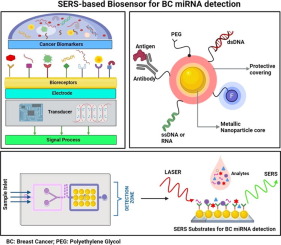
Surface-enhanced Raman scattering biosensors for detection of oncomiRs in breast cancer
Source : https://www.sciencedirect.com/science/article/abs/pii/S1359644622001635?via=ihub
Available online 20 April 2022 * SERS-biosensors offer sensitive detection of circulating cancer biomarkers. * They encompass benefits of specificity, stability, and easy-to-use methods. * Various SERS strategies for BC...
Conclusion/Relevance: In this review, we provide a comprehensive understanding of different SERS-based biosensors and their application to identify BC-specific oncomiRs. We also discuss different SERS-based sensing strategies, nano-analytical frameworks, and challenges to be addressed for effective clinical translation.
Yahoo | Mail, Weather, Search, Politics, News, Finance, Sports & Videos
Source : https://www.yahoo.com
Since the Great Recession, the college-educated have taken more frontline jobs at companies like Starbucks and Amazon. Now they're helping to unionize them. A unifying common thread "