



Survival Outcomes in Patients With Hormone Receptor-Positive Metastatic Breast Cancer With Low or No ERBB2 Expression Treated With Targeted Therapies Plus Endocrine Therapy - PubMed
Source : https://pubmed.ncbi.nlm.nih.gov/37166793/
The .gov means it's official. Federal government websites often end in .gov or .mil. Before sharing sensitive information, make sure you're on a federal government site. The site is secure....
Conclusions and Relevance: In this cohort study of patients with HR-positive mBC treated with TT plus ET, low ERBB2 expression did not have a significant association with prognosis.

Review of the monarchE trial suggests no evidence to support use of adjuvant abemaciclib in women with breast cancer - Authors' reply - PubMed
Source : https://pubmed.ncbi.nlm.nih.gov/37146620/
The .gov means it's official. Federal government websites often end in .gov or .mil. Before sharing sensitive information, make sure you're on a federal government site. The site is secure....
Relevance: The monarchE investigators respectfully disagree with the comments of Tomer Meirson and colleagues in their Essay in The Lancet Oncology regarding the role of adjuvant abemaciclib in patients with early breast cancer. monarchE was a large, global, randomised study conducted in patients with high-risk, hormone...

Less necessity of adjuvant S-1 treatment in non-monarchE-eligible patients - PubMed
Source : https://pubmed.ncbi.nlm.nih.gov/37162105/
MonarchE criteria accurately identify patients who are prone to relapse. Moreover, although POTENT criteria also suggested a reasonable capacity for recurrence prediction, there was no significant difference in recurrence between...
Conclusion: MonarchE criteria accurately identify patients who are prone to relapse. Moreover, although POTENT criteria also suggested a reasonable capacity for recurrence prediction, there was no significant difference in recurrence between POTENT non-eligible patients and the patients who were POTENT but not monarchE eligible. This might...

Response to Pralsetinib in Multi-Drug-Resistant Breast Cancer With CCDC6-RET Mutation - PubMed
Source : https://pubmed.ncbi.nlm.nih.gov/37141396/
Triple-negative breast cancers (TNBC) represent a pathological subtype of breast cancer, which are characterized by strong invasiveness, high metastasis rate, low survival rate, and poor prognosis, especially in patients who...
Conclusions/Relevance: This case report is believed to be the first demonstrating clinical efficacy of pralsetinib in a patient with multidrug-resistant breast cancer with a coiled-coil domain-containing protein 6-rearranged during transfection mutation.
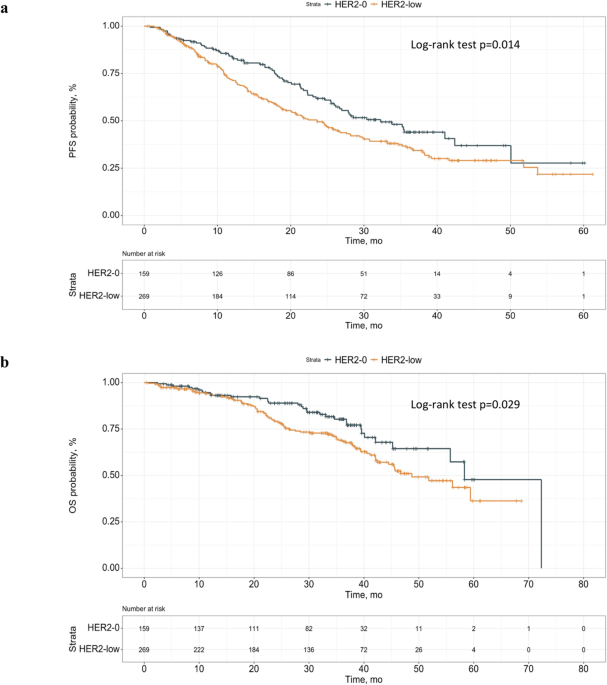
Prognostic significance of HER2-low status in HR-positive/HER2-negative advanced breast cancer treated with CDK4/6 inhibitors - npj Breast Cancer
Source : https://www.nature.com/articles/s41523-023-00534-1
Whether Human Epidermal growth factor Receptor 2 (HER2)-low status has prognostic significance in HR + /HER2- advanced Breast Cancer (aBC) patients treated with first-line Endocrine Therapy plus CDK 4/6 inhibitors remains unclear....
Abstract: Whether Human Epidermal growth factor Receptor 2 (HER2)-low status has prognostic significance in HR + /HER2- advanced Breast Cancer (aBC) patients treated with first-line Endocrine Therapy plus CDK 4/6 inhibitors remains unclear. In 428 patients evaluated, HER2-low status was independently associated with significantly worse...