


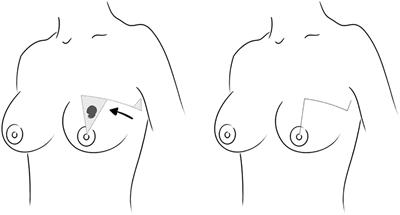
Dermoglandular advancement-rotation flap for conservative treatment of breast cancer - description of technique, objective and subjective assessments
Source : https://www.frontiersin.org/articles/10.3389/fonc.2023.1137924/full
Objectiveto describe and evaluate the dermoglandular advancement-rotation flap with no contralateral surgery as a technique for the conservative treatment of breast cancer when skin or a large proportion of gland...
Conclusion: Dermoglandular advancement-rotation flap technique with no contralateral surgery provides good symmetry when a large proportion of skin or gland requires resection on breast conservative cancer treatment.

Regression and Eradication of Triple-Negative Breast Carcinoma in 4T1 Mouse Model by Combination Immunotherapies - PubMed
Source : https://pubmed.ncbi.nlm.nih.gov/37190294/
Triple-negative breast carcinoma (TNBC) is one of the most aggressive types of solid-organ cancers. While immune checkpoint blockade (ICB) therapy has significantly improved outcomes in certain types of solid-organ cancers,...
Conclusions/Relevance: We developed a potentially curative immunotherapeutic regimen consisting of HMGN1, FSL-1, R848, plus a checkpoint inhibitor for TNBC, which does not rely on the administration of chemotherapy, radiation, or exogenous tumor-associated antigen(s).
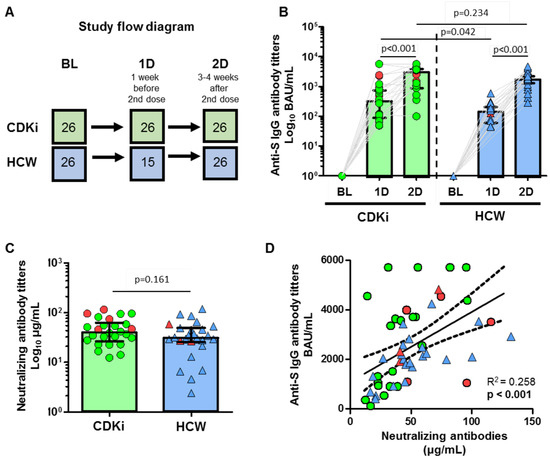
Discordant Humoral and T-Cell Response to mRNA SARS-CoV-2 Vaccine and the Risk of Breakthrough Infections in Women with Breast Cancer, Receiving Cyclin-Dependent Kinase 4 and 6 Inhibitors
Source : https://www.mdpi.com/2072-6694/15/7/2000
Few data are available about the immune response to mRNA SARS-CoV-2 vaccines in patients with breast cancer receiving cyclin-dependent kinase 4/6 inhibitors (CDK4/6i). We conducted a prospective, single-center study of...
Conclusions: In conclusion, patients treated with CDK4/6i showed a robust humoral response, but a blunted trend of T-cell response in comparison with a cohort of healthy volunteers, suggesting a trend of reduced adaptative immune response in this group. Moreover, a higher risk of infection was observed during follow-up in those patients with...

Copy number aberrations in ctDNA enables prognosis prediction and molecular characterization of breast cancer
You do not currently have access to this article. Don't already have a personal account? Register Copy number aberrations in ctDNA enables prognosis prediction and molecular characterization of breast cancer...
Conclusions: These results demonstrate LP-WGS ctDNA CNA analysis as an essential tool for prognosis prediction and molecular profiling. Particularly, ctDNA CNA burden can serve as a useful determinant for escalating or de-escalating (neo)adjuvant strategy in TNBC patients.