



Top advances of the year: Precision oncology - PubMed
Source : https://pubmed.ncbi.nlm.nih.gov/36946766/
The advent of precision medicine has changed the landscape of oncologic biomarkers, drug discovery, drug development, and, more importantly, outcomes for patients with cancer. Precision oncology entails the genomic profiling...
Conclusions/Relevance: Rapid clinical development was seen of targeted agents across various mutational profiles such as KRASG12C (which was considered “undruggable” for almost 4 decades), Exon 20 insertions, and RET mutations. Approaches to precision chemotherapy delivery by the introduction of antibody drug conjugates in the...

Osimertinib and selpercatinib efficacy, safety, and resistance in a multicenter, prospectively treated cohort of EGFR-mutant and RET fusion-positive lung cancers
Abstract. Purpose: Acquired RET fusions have been reported at resistance to treatment with EGFR inhibitors in EGFR-mutant non-small cell lung cancer (NSCLC), however, a multicenter cohort of patients with EGFR-mutant...
Conclusions: For patients with EGFR-mutant NSCLC with an acquired RET fusion as a mechanism of EGFR inhibitor resistance, the addition of selpercatinib to osimertinib was feasible, safe, and offered clinical benefit, supporting the prospective evaluation of this combination.
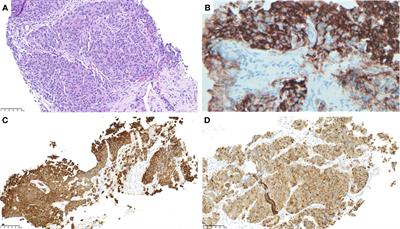
Response to selpercatinib in a patient with RET fusion-positive pulmonary large-cell neuroendocrine carcinoma: A case report
Source : https://www.frontiersin.org/articles/10.3389/fonc.2023.1134151/full
Large-cell neuroendocrine carcinoma (LCNEC) is a rare subtype of non-small-cell lung cancer associated with a poor prognosis. LCNEC is genetically heterogeneous, and studies have revealed distinct molecular subtypes of LCNEC,...
Conclusions/Relevance: In this case report, we describe a patient with stage IV pulmonary LCNEC harboring a KIF5B–RET fusion whose disease responded to selpercatinib both extra- and intra-cranially, highlighting the importance of comprehensive molecular testing in LCNEC for selection of optimal treatment. To the best of our...

Multi-omics profiling of papillary thyroid microcarcinoma reveals different somatic mutations and a unique transcriptomic signature - Journal of Translational Medicine
Source : https://translational-medicine.biomedcentral.com/articles/10.1186/s12967-023-04045-2
Background Papillary thyroid microcarcinoma (PTMC) incidence has significantly increased, and some cases still exhibit invasive traits. The entire molecular landscape of PTMC, which can offer hints for the etiology of...
Conclusions: Our findings comprehensively define the clinical and molecular features of PTMC and may inspire new therapeutic hypotheses.
-
Advances in RET Therapy3yrKey Points • Source: Journal of Translational Medicine • Relevance: “Our findings comprehensively define the clinical and molecular features of PTMC [papillary thyroid microcarcinoma] and may inspire new therapeutic hypotheses.” • In this novel study, Chinese Show More

Challenges and strategies to combat resistance mechanisms in thyroid cancer therapeutics - PubMed
Source : https://pubmed.ncbi.nlm.nih.gov/36924302/
The .gov means it's official. Federal government websites often end in .gov or .mil. Before sharing sensitive information, make sure you're on a federal government site. The site is secure....
Conclusions: Progression-free survival is curtailed by developing acquired resistance. To minimise this therapeutic liability, clinicians must be anticipatory in identifying the drivers and characterising mechanisms of on target resistance.