


Gut Microbiota Dysbiosis in the Development and Progression of Gastric Cancer
Source : https://www.hindawi.com/journals/jo/2022/9971619/
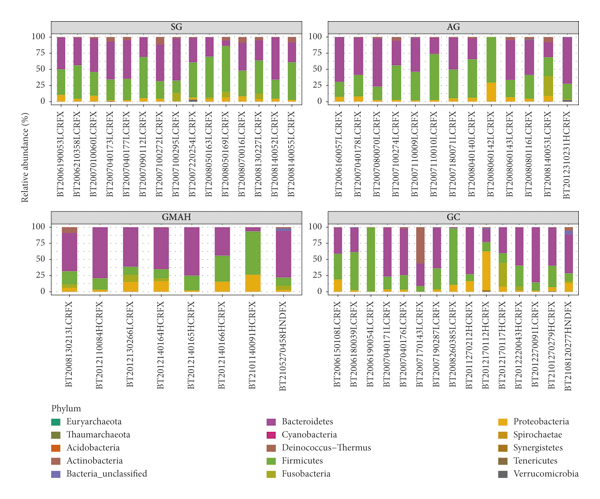
Gut Microbiota Dysbiosis in the Development and Progression of Gastric Cancer: Objectives . This study aims to explore gut microbiota dysbiosis in the histological stages of gastric cancer (GC). Methods...
Conclusions: We identified differences in microbial compositional changes across stages of GC. Six genera and two metabolic pathways were more abundant in the GC group than noncancer groups, suggesting that these findings may contribute to the therapy strategies in GC in the near feature.

European-Australasian consensus on the management of advanced gastric and gastro-oesophageal junction cancer: current practice and new directions
Source : https://www.ncbi.nlm.nih.gov/pmc/articles/PMC9425884/
Gastric carcinoma and gastro-oesophageal junction (GC/GEJ) carcinoma remain a significant global problem, with patients presenting with symptoms often found to have advanced or metastatic disease. Treatment options for these patients...
Conclusion/Relevance: In this review, we highlight the positive evidence from key trials that have led to our current practice algorithm, with particular focus on the refractory advanced disease setting, discussing the areas of active research and highlighting the factors, including biomarkers and the influence of ethnicity, that contribute to...
-
Gastric Cancer Connect3yrKey Points • Source: Therapeutic Advances in Medical Oncology • Conclusion: “In this review, we highlight the positive evidence from key trials that have led to our current practice algorithm, with particular focus on Show More
Machine learning: A non-invasive prediction method for gastric cancer based on a survey of lifestyle behaviors
Source : https://www.frontiersin.org/articles/10.3389/frai.2022.956385/full
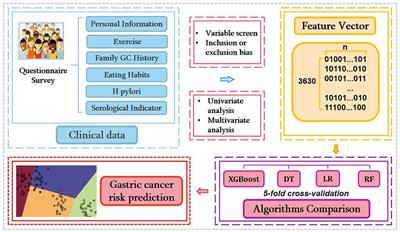
Gastric cancer remains an enormous threat to human health. It is extremely significant to make a clear diagnosis and timely treatment of gastrointestinal tumors. The traditional diagnosis method (endoscope, surgery,...
Conclusion/Relevance: This work aims to construct a cheap, non-invasive, rapid, and high-precision gastric cancer diagnostic model using personal behavioral lifestyles and non-invasive characteristics. A retrospective study was implemented on 3,630 participants. The developed models (extreme gradient boosting, decision tree, random forest, and...

Deep learning captures selective features for discrimination of microsatellite instability from pathologic tissue slides of gastric cancer - PubMed
Source : https://pubmed.ncbi.nlm.nih.gov/36054320/
Microsatellite instability (MSI) status is an important prognostic marker for various cancers. Furthermore, because immune checkpoint inhibitors are much more effective in tumors with high level of MSI (MSI-H), MSI...
Conclusion: These results indicate that DL could automatically learn the optimal features for discrimination of MSI status in GC tissue slides. This study demonstrated the potential of a DL-based MSI classifier as a screening tool for definitive cases.

Ginsenoside Rh1 regulates gastric cancer cell biological behaviours and transplanted tumour growth in nude mice via the TGF-β/Smad pathway - PubMed
Source : https://pubmed.ncbi.nlm.nih.gov/36054718/
Gastric cancer (GC) is one of the most prevalent malignancies of the digestive tract. Ginsenoside Rh1 was reported to exert effects on GC. The current study set out to explore...
Conclusion: Collectively, our findings highlighted that ginsenoside Rh1 inhibited GC cell growth and tumour growth in xenograft tumour models via inhibition of the TGF-β/Smad pathway.