



Gastric cancer growth modulated by circSNTB2/miR-6938-5p/G0S2 and PDCD4
Source : https://www.eurekaselect.com/article/127459
Background: Gastric cancer (GC) is the third most common cause of cancer-related death worldwide. Increasing studies have indicated that circular RNAs (circRNAs) play critical roles in cancer progression. However, the...
Conclusions: Taken together, our findings demonstrated that circSNTB2 plays an essential role in gastric cancer by regulating miR-6938-5p through G0S2 and PDCD4 genes. CircSNTB2 could be a promising biomarker for GC diagnosis and targeted therapy.
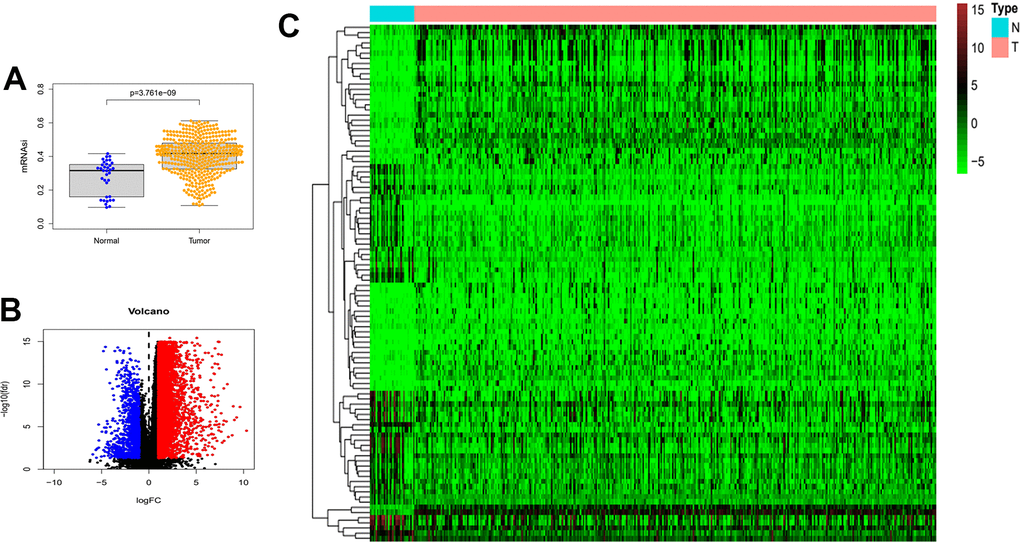
MAGE-A3 regulates tumor stemness in gastric cancer through the PI3K/AKT pathway | Aging
Source : https://www.aging-us.com/article/204373/text
Gastric cancer remains a malignant disease of the digestive tract with high mortality and morbidity worldwide. However, due to its complex pathological mechanisms and lack of effective clinical therapies, the...
Conclusions: Our data supports that MAGE-A3 is a tumor stemness regulator and a potent prognostic biomarker which can help the prediction and treatment of gastric cancer patients.
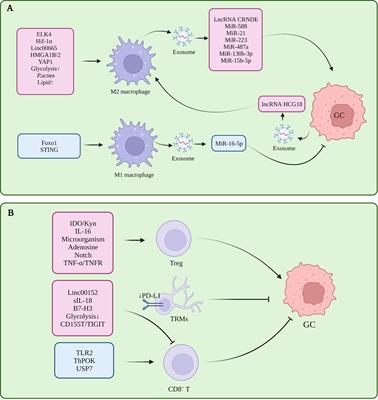
Tumor microenvironment-mediated immune tolerance in development and treatment of gastric cancer
Source : https://www.frontiersin.org/articles/10.3389/fimmu.2022.1016817/full
Tumor microenvironment is the general term for all non-cancer components and their metabolites in tumor tissue. These components include the extracellular matrix, fibroblasts, immune cells, and endothelial cells. In the...
Conclusions: In this study, we summarize the latest mechanisms of various components of the tumor microenvironment in gastric cancer for inducing immune tolerance and promoting the formation of the malignant phenotype of gastric cancer, as well as the research progress of targeting the tumor microenvironment to overcome immune tolerance in the...

The predictive potential of contrast-enhanced computed tomography based radiomics in the preoperative staging of cT4 gastric cancer
Source : https://qims.amegroups.com/article/view/100581/html
The eighth edition of tumor node metastasis (TNM) classification is currently the most authoritative and generalized staging system for gastric cancer ( 1, 2). According to this staging system, T4b...
Conclusions: CE-CT-based radiomics nomogram offers good accuracy and stability in differentiating preoperative cT4 stage gastric cancer patients into pT4b and non-pT4b stages, which has a great clinical relevance for selecting the course of treatment for cT4 stage gastric cancer patients.
-
Gastric Cancer Connect3yrKey Points • Conclusions: “CE-CT-based radiomics nomogram offers good accuracy and stability in differentiating preoperative cT4 stage gastric cancer patients into pT4b and non-pT4b stages, which has a great clinical relevance for Show More
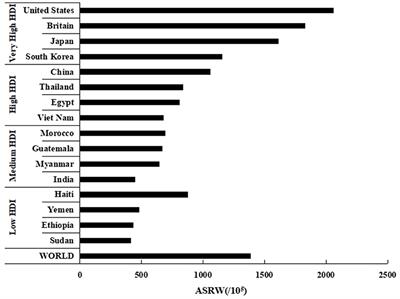
Trends of cancer incidence among Chinese older adults from 2005 to 2016: A log-linear regression and age-period-cohort analysis
Source : https://www.frontiersin.org/articles/10.3389/fpubh.2022.1023276/full
BackgroundTo study the corresponding strategies for controlling cancer in older adults aged 60 and above in China, a comprehensive assessment of disease burden is required. Therefore, we will introduce the...
Conclusions: The cancer incidence in Chinese older adults aged 60 and above showed a decreasing trend, but it was still at a relatively high level. The key targets of prevention and treatment should be males, urban areas, younger people, older adults aged 60–69, lung, gastrointestinal, and breast cancers in the future.