


Comparison of doxifluridine and tegafur/gimeracil/oteracil (S-1) as adjuvant chemotherapy for patients with gastric cancer after gastrectomy: A propensity score-matched analysis
Source : https://www.sciencedirect.com/science/article/pii/S101595842300372X?via=ihub
Doxifluridine (DF), an oral 5-FU prodrug, has been used for various solid cancers due to its efficacy and low toxicity. We aim to evaluate the effect ...
Conclusion: There was no significant difference in the oncologic effect and patient compliance between DF and S-1 groups. DF could be an alternative option for adjuvant chemotherapy in advanced gastric cancer. In addition, we confirmed that relative dose intensity is an important independent prognostic factor for survival.
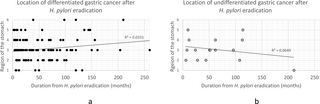
Differences in clinical features and morphology between differentiated and undifferentiated gastric cancer after Helicobacter pylori eradication
Source : https://journals.plos.org/plosone/article?id=10.1371/journal.pone.0282341
Background/Aims Although undifferentiated gastric cancer (UGC) diagnosed after Helicobacter pylori eradication (HPE) carries a poor prognosis, characteristics of post-HPE UGC have not been evaluated in detail because of its low...
Conclusion: UGC was diagnosed even after long time spans following HPE, although the number of cases was small. Female sex, and especially absent follow-up, were risks for post-HPE UGC, suggesting that diligent long-term follow-up after HPE is essential.

Changes in failure to rescue after gastrectomy at a large-volume center with a 16-year experience in Korea - PubMed
Source : https://pubmed.ncbi.nlm.nih.gov/37002330/
Failure to rescue (FTR), the mortality rate among patients with complications, is gaining attention as a hospital quality indicator. However, comprehensive investigation into FTR has rarely been conducted after radical...
Conclusions/Relevance: This investigation of FTR after gastrectomy demonstrated that the risk factors for FTR were old age, high ASA score, serosa exposure, and operation period. FTR varied according to the complication types and the period, even in the same institution.

Evolution of the Targeted Therapy Landscape for Cholangiocarcinoma: Is Cholangiocarcinoma the 'NSCLC' of GI Oncology? - PubMed
Source : https://pubmed.ncbi.nlm.nih.gov/36900367/
In the past two decades, molecular targeted therapy has revolutionized the treatment landscape of several malignancies. Lethal malignancies such as non-small cell lung cancer (NSCLC) have become a model for...
Relevance: This review aims to present the current status of molecularly matched targeted therapy for advanced CCA.
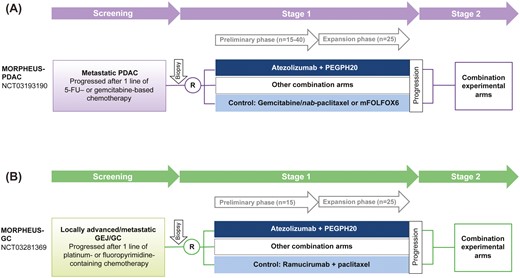
Atezolizumab Plus PEGPH20 Versus Chemotherapy in Advanced Pancreatic Ductal Adenocarcinoma and Gastric Cancer: MORPHEUS Phase Ib/II Umbrella Randomized Study Platform
Source : https://academic.oup.com/oncolo/advance-article/doi/10.1093/oncolo/oyad022/7081215?login=false
Combining atezolizumab with PEGPH20 did not improve clinical outcomes vs. standard-of-care chemotherapy combination regimens in patients with previously treated advanced PDAC or GC. The safety of atezolizumab plus PEGPH20 was...
Conclusion: Atezolizumab plus PEGPH20 showed limited clinical activity in patients with PDAC and none in patients with GC. The safety of atezolizumab plus PEGPH20 was consistent with each agent’s known safety profile. (ClinicalTrials.gov Identifier: NCT03193190 and NCT03281369).