



A Retrospective Cohort Study Examining The Effects of Anti-Pd-1 Antibody in Combination with Apatinib in Patients Previously Treated for Her2-Negative Advanced Gastric/Gastroesophageal Junction Cancer - PubMed
Source : https://pubmed.ncbi.nlm.nih.gov/37005358/
The .gov means it's official. Federal government websites often end in .gov or .mil. Before sharing sensitive information, make sure you're on a federal government site. The site is secure....
Conclusions/Relevance: This trial demonstrated combination therapy with an anti-PD-1 antibody and apatinib was effective and safe in patients with previously treated unresectable advanced or metastatic G/GEJ cancer.
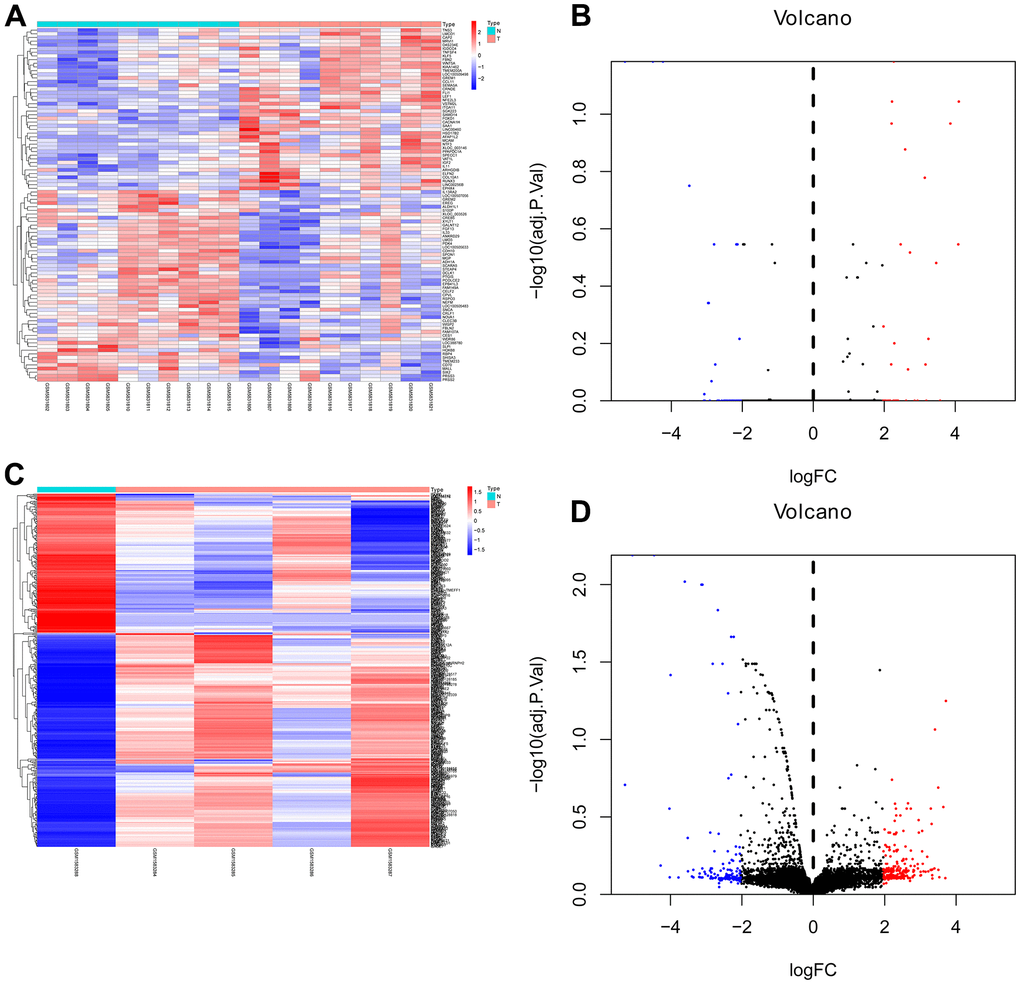
High expression of serine protease 2 (PRSS2) associated with invasion, metastasis, and proliferation in gastric cancer | Aging
Source : https://www.aging-us.com/article/204604/text
Background: Accumulating evidence indicates that the occurrence and development of tumors are related to the activation of oncogenes and the inactivation of tumor suppressor genes caused by epigenetic mechanisms. However,...
Conclusions: Our results indicated that PRSS2 may play vital roles in the carcinogenesis and progression of GC and can be potential biomarkers for patients with GC.
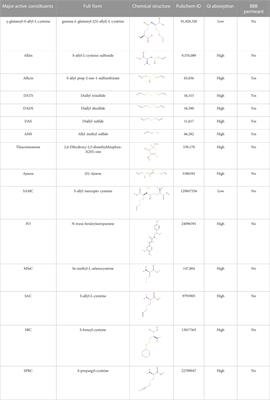
Updates on the anticancer potential of garlic organosulfur compounds and their nanoformulations: Plant therapeutics in cancer management
Source : https://www.frontiersin.org/articles/10.3389/fphar.2023.1154034/full
Garlic (Allium sativum L.) possesses numerous pharmacological potential, including antibacterial, antiarthritic, antithrombotic, anticancer, hypoglycemic, and hypolipidemic effects. The anti-cancer action of garlic is likely the best researched of the many...
Conclusions/Relevance: Hence, this review deciphers the anticancer potential of garlic components and its nanoformulations against several breast cancer thereby projecting it as a potent drug candidate for efficient breast cancer management.

Meta-analysis reveals Helicobacter pylori mutual exclusivity and reproducible gastric microbiome alterations during gastric carcinoma progression - PubMed
Source : https://pubmed.ncbi.nlm.nih.gov/37020297/
Accumulating evidence shows that the gastric bacterial community may contribute to the development of gastric cancer (GC). However, the reported alterations of gastric microbiota were not always consistent among the...
Discussion: In this paper, we reanalyzed nine available public datasets of human gastric microbiota via consistent pipelines and comprehensively assessed alterations of the gastric microbiome across the GC cascade in an effort to address the issue of reproducibility among heterogeneous studies. Our results highlight the influence of the...

Whole Exome Sequencing Study Suggests an Impact of FANCA, CDH1 and VEGFA Genes on Diffuse Gastric Cancer Development - PubMed
Source : https://pubmed.ncbi.nlm.nih.gov/36833207/
Gastric cancer (GC) is one of the most common cancer types in the world with a high mortality rate. Hereditary predisposition for GC is not fully elucidated so far. The...
Conclusions/Relevance: Three pathogenic variants were identified: c.1320+1G>A in the CDH1 gene and c.27_28insCCCAGCCCCAGCTACCA (p.Ala9fs) of the VEGFA gene were found only in the tumor tissue, whereas c.G1874C (p.Cys625Ser) in the FANCA gene was found in both the tumor and normal tissue. These changes were...