

Leukemia and Lymphoma Connect
  • Saved
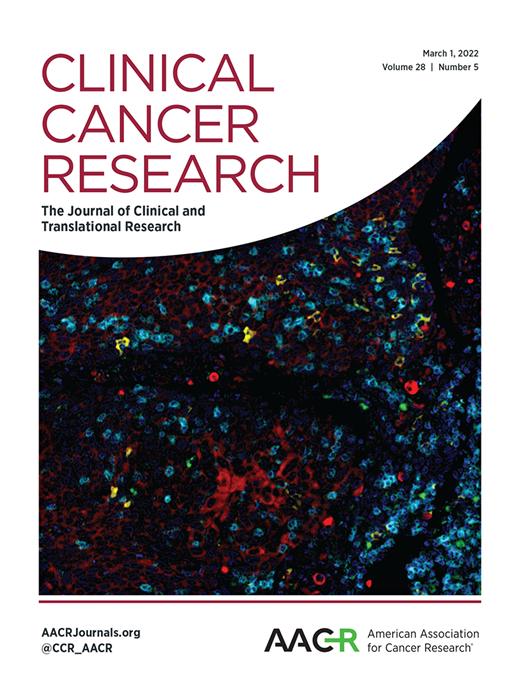
Safety and Efficacy of Pembrolizumab in Combination With Acalabrutinib in Advanced Head and Neck Squamous Cell Carcinoma: Phase 2 Proof-of-Concept Study

Safety and Efficacy of Pembrolizumab in Combination With Acalabrutinib in Advanced Head and Neck Squamous Cell Carcinoma: Phase 2 Proof-of-Concept Study

Source : https://clincancerres.aacrjournals.org/content/early/2021/12/02/1078-0432.CCR-21-2547

Purpose: Programmed cell death-1 (PD-1) receptor inhibitors have shown efficacy in head and neck squamous cell carcinoma (HNSCC), but treatment failure or secondary resistance occurs in most patients. In preclinical...


Conclusions: Despite lack of clinical efficacy, immune subset analyses suggest that there are additive effects of this combination; however, the associated toxicity limits the feasibility of combination treatment with pembrolizumab and acalabrutinib in patients with recurrent or metastatic HNSCC.

  • Saved

made a Post

Question & Answer Session: Bruton's tyrosine kinase (BTK) inhibitors

Leukemia and Lymphoma Connect recently hosted a question & answer session with Oncologists around Bruton's tyrosine kinase (BTK) inhibitors. Below are some highlights from the session:

Respondents noted positive experiences using BTK inhibitors for the treatment of CLL & MCL; however, treatment costs and prior authorization requirements were noted as potential burdens.

  • “I have a good experience with the BTK inhibitors in general. Specifically, regarding efficacy, many of my patients with CLL and MCL have had a good response, particularly in CLL that had long-lasting response.”
  • “My experience has been quite good, especially in first-line setting. Patients seem to have a very excellent durable response lasting for many years.”
  • “Multiple patients of mine have asked to stop treatment after 1 or 2 years of treatment, even though it's effective and they tolerate treatment well because they cannot afford the co-pay…”
  • “We'll have to do a prior authorization usually. Sometimes the medications are expensive. We may need to get them some copay assistance or some foundation assistance, so they may have some copays, or we may have to go to the company to help figure out how to get it for them.”

Respondents shared varying experiences regarding their use of BTK inhibitors for conditions other than CLL or MCL.

  • “I have used BTK inhibitors in chronic graft-versus-host disease. That is probably the space I use it the most in outside of CLL and MCL. It was the first drug approved for the treatment of chronic GVHD, so that's kind of where I've used it. I find it to be potentially not as effective as it is, say, in other disease states, though chronic GVHD is very challenging to treat.”
  • “I have not used it for small lymphocytic lymphoma or chronic GVHD.”

Several respondents noted they counsel patients regarding the indefinite nature of treatment with BTK inhibitors.

  • “I mention that the fact that we can treat until progression means that the treatment is safe and well tolerated enough to allow for indefinite treatment until progression, and I find that many patients like that rationale, understand the rationale.”
  • “I tell them to expect that they could potentially be on it for a long time and that they could potentially do well, but then I don't have a particular time in which I expect them to stop it and that every time we see them, we continue to evaluate the risks and benefits of it. But as long as they're tolerating it well, I expect that they'll continue treatment almost indefinitely.”

Some respondents indicated they were excited about the future of non-covalent BTK inhibitors, while others were taking a wait-and-see approach, with more evidence needed.

  • “They seem to be able to still reverse the inhibition of the BTK pathway and become effective again in the treatment of both CLL and mantle cell lymphoma, and it is hopeful that when they get approved I'll look at the clinical data, but the initial preliminary data that's coming out suggest that you can re-challenge patients who have failed standard covalent therapy with these new approaches and may have an opportunity to overcome the resistance that has occurred with the BTK inhibition, and I await further decisions pending clinical approval by the FDA.”

  • Saved
Bruton's Tyrosine Kinase (BTK) Inhibitors and Autoimmune Diseases: Making Sense of BTK Inhibitor Specificity Profiles and Recent Clinical Trial Successes and Failures

Bruton's Tyrosine Kinase (BTK) Inhibitors and Autoimmune Diseases: Making Sense of BTK Inhibitor Specificity Profiles and Recent Clinical Trial Successes and Failures

Source : https://www.ncbi.nlm.nih.gov/pmc/articles/PMC8595937/

Research into the treatment of autoimmune diseases has made great strides toward improving our understanding of disease mechanisms driving pathology. This has led to the development of therapies that go...


Conclusion/Relevance: Based on the data collected in this study, we propose that current compound characteristics of BTK inhibitor drug candidates for the treatment of autoimmune diseases have achieved the selectivity, safety, and coverage requirements necessary to deliver therapeutic benefit.

  • 4yr
    ey Points • Source: Frontiers in Immunology • Conclusion/Relevance: “Collectively, the new class of BTK inhibitors show promise in bringing new treatment paradigms to treating autoimmune disease disorders. Enhancement of selectivity, unique enzyme coverage Show More
  • Saved
Autoimmune Hemolytic Anemia in Chronic Lymphocytic Leukemia: A Comprehensive Review - PubMed

Autoimmune Hemolytic Anemia in Chronic Lymphocytic Leukemia: A Comprehensive Review - PubMed

Source : https://pubmed.ncbi.nlm.nih.gov/34830959/

Chronic lymphocytic leukemia (CLL) patients have a greater predisposition to develop autoimmune complications. The most common of them is autoimmune hemolytic anemia (AIHA) with a frequency of 7-10% of cases....


Conclusion/Relevance: Patients not responding to corticosteroids and rituximab should be treated with CLL-specific drugs as per current guidelines according to age and comorbidities. New targeted drugs (BTK inhibitors and anti BCL2) are recently used after or together with steroids to manage AIHA. In the case of cold agglutinin disease,...

  • Saved
Outcome of patients with mantle cell lymphoma after autologous stem cell transplantation in the pre‐CAR T‐cell era Letter

Outcome of patients with mantle cell lymphoma after autologous stem cell transplantation in the pre‐CAR T‐cell era Letter

Source : https://onlinelibrary.wiley.com/doi/10.1002/hon.2952

This article has been accepted for publication and undergone full peer review but has not been through the copyediting, typesetting, pagination and proofreading process, which may lead to differences between...


Conclusion/Relevance: Even after HDCT/ASCT, a substantial proportion of MCL patients will relapse and ultimately die of the disease, emphasizing the need for new therapeutic options including CAR T-cell treatment for this lymphoma subtype.