



Bruton tyrosine kinase inhibitors in B-cell lymphoma: beyond the antitumour effect - Experimental Hematology & Oncology
Source : https://ehoonline.biomedcentral.com/articles/10.1186/s40164-022-00315-9
Targeting B-cell receptor signalling using Bruton tyrosine kinase (BTK) inhibitors (BTKis) has become a highly successful treatment modality for B-cell malignancies, especially for chronic lymphocytic leukaemia. However, long-term administration of...
Conclusion/Relevance: The broad involvement of BTK in immunological pathways provides a rationale to combine BTKis with specific immunotherapies, such as immune checkpoint inhibitor or chimeric antigen receptor-T-cell therapy, for the treatment of relapsed or refractory diseases. This review discusses and summarises the above-mentioned issues as...
MAJIC: a phase III trial of acalabrutinib + venetoclax versus venetoclax + obinutuzumab in previously untreated chronic lymphocytic leukemia or small lymphocytic lymphoma
Source : https://www.futuremedicine.com/doi/10.2217/fon-2022-0456
Here we describe the rationale and design of MAJIC, a phase III, prospective, multicenter, randomized trial comparing the combination of the BTK inhibitor acalabrutinib plus the BCL2 inhibitor venetoclax versus...
Relevance: This study will address key unanswered questions in frontline chronic lymphocytic leukemia/small lymphocytic lymphoma therapy by investigating the optimal duration of finite treatment and identifying the optimal venetoclax doublet regimen.
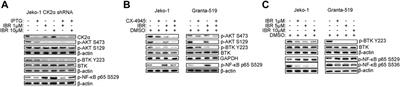
Protein Kinase CK2 represents a new target to boost Ibrutinib and Venetoclax induced cytotoxicity in mantle cell lymphoma
Source : https://www.frontiersin.org/articles/10.3389/fcell.2022.935023/full
Mantle cell lymphoma (MCL) is an incurable B cell non-Hodgkin lymphoma, characterized by frequent relapses. In the last decade, the pro-survival pathways related to BCR signaling and Bcl-2 have been...
Conclusion/Relevance: The demonstration of a CK2-dependent upregulation of pathways that may antagonize the effect of these drugs may offer a novel strategy to overcome primary and secondary resistance.

Bioequivalence and Relative Bioavailability Studies to Assess a New Acalabrutinib Formulation That Enables Coadministration With Proton-Pump Inhibitors - PubMed
Source : https://pubmed.ncbi.nlm.nih.gov/36029150/
Acalabrutinib is a Bruton tyrosine kinase (BTK) inhibitor approved to treat adults with chronic lymphocytic leukemia, small lymphocytic lymphoma, or previously treated mantle cell lymphoma. As the bioavailability of the...
Relevance: Acalabrutinib is a Bruton tyrosine kinase (BTK) inhibitor approved to treat adults with chronic lymphocytic leukemia, small lymphocytic lymphoma, or previously treated mantle cell lymphoma. As the bioavailability of the acalabrutinib capsule (AC) depends on gastric pH for solubility and is impaired by acid-suppressing therapies,...

Experiences with Glofitamab Administration following CAR T Therapy in Patients with Relapsed Mantle Cell Lymphoma - PubMed
Source : https://pubmed.ncbi.nlm.nih.gov/36078155/
Mantle cell lymphoma (MCL) is a rare type of B-cell Non-Hodgkin lymphoma (NHL) affecting predominantly male patients. While complete remissions following first-line treatment are frequent, most patients ultimately relapse, with...
Conclusion: Therapy with bispecific antibodies might offer an effective and well-tolerated option for patients with mantle cell lymphoma relapsing after CAR T therapy.