


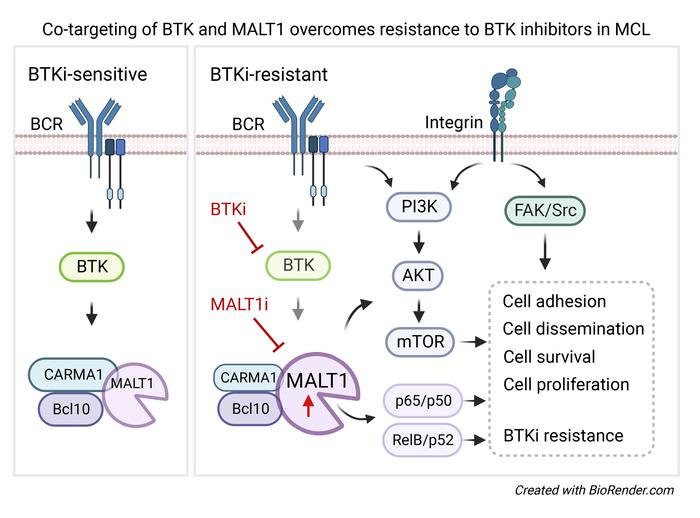
Cotargeting of BTK and MALT1 overcomes resistance to BTK inhibitors in mantle cell lymphoma
Source : https://www.jci.org/articles/view/165694
In this study, we found that MALT1 was overexpressed in IBN-resistant (IBN-R) MCL cells. Genetic knockout (KO) or pharmacological inhibition revealed that MALT1, but not CARD11, drives BTKi resistance via...
Conclusions: We conclude that MALT1 overexpression associates with resistance to BTK inhibitors in MCL, targeting abnormal MALT1 activity could be a promising therapeutic strategy to overcome BTK inhibitor resistance, and cotargeting of MALT1 and BTK should improve MCL treatment efficacy and durability as well as patient outcomes.
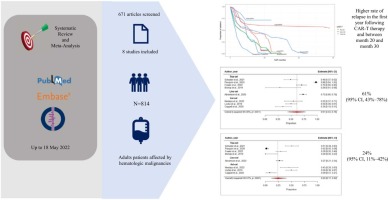
Late relapse after CAR-T cell therapy for adult patients with hematologic malignancies: A definite evidence from systematic review and meta-analysis on individual data
Source : https://www.sciencedirect.com/science/article/pii/S1043661823000981?via=ihub
Chimeric Antigen Receptor (CAR)-modified T lymphocytes represent one of the most innovative and promising approaches to treating hematologic malignancies. CAR-T cell therapy is currently being used for the treatment of...
Conclusions/Relevance: Our results suggest that identifying potential predictive biomarkers of response to CAR-T therapy, especially for patients affected by the advanced stage of blood malignancies, could lead to stratification of the eligible population to that therapy, recognizing which patients will benefit and which will not, helping...
Inhibition of SRC-3 as a potential therapeutic strategy for aggressive mantle cell lymphoma
Source : https://www.researchsquare.com/article/rs-2653461/v1
Mantle cell lymphoma (MCL) is a heterogeneous disease with a poor prognosis. Despite years of research in MCL, relapse occurs in patients with current therapeutic options necessitating the development of...
Conclusions/Relevance: These findings indicate that targeting SRC-3 should be investigated in combination with current clinical therapeutics as a novel strategy to expand the therapeutic index and to improve lymphoma outcomes.
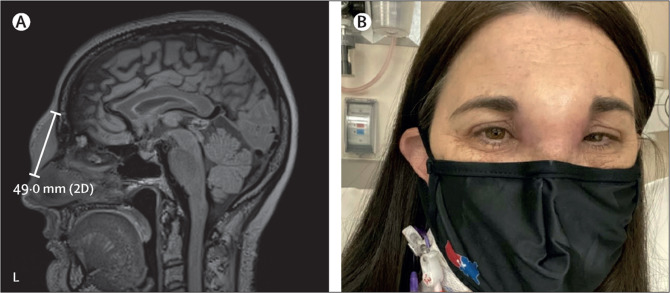
Glabellar mass in a case of mantle-cell lymphoma treated by CAR T-cell therapy
Source : https://www.thelancet.com/journals/lancet/article/PIIS0140-6736(23)00589-5/fulltext
A 50-year-old woman attended our clinic reporting a slow-growing mass over the bridge of her nose; she said it had been present for approximately 6 months. She had earlier been...
Relevance: A 50-year-old woman with mantle-cell lymphoma reported a 6-month history of a slow-growing mass over the bridge of her nose. The patient had no pain, respiratory symptoms, nasal discharge, double vision, headache, fever, night sweats, or weight loss. She reported no recent infections or recent international travel. On examination,...

Prognostic value of cross-lineage expression of the myeloid-associated antigens CD13 and CD33 in adult B-lymphoblastic leukemia: A large real-world study of 1005 patients - PubMed
Source : https://pubmed.ncbi.nlm.nih.gov/36951610/
In real-world practice, CD13/CD33 expression can predict the risk of MRD in patients without TKI experience, but has no adverse effect on the prognosis of adult B-ALL patients. Incorporating CD13/CD33...
Conclusions: In real-world practice, CD13/CD33 expression can predict the risk of MRD in patients without TKI experience, but has no adverse effect on the prognosis of adult B-ALL patients. Incorporating CD13/CD33 into the standard antibody panels of B-ALL diagnosis and MRD measurements can help predict relapse risk and decisions on therapy...