



Type B Lactic Acidosis in a Patient with Mantle Cell Lymphoma
Source : https://www.hindawi.com/journals/cricc/2023/7021123/
Type B lactic acidosis is an uncommon medical emergency in which acid production overwhelms hepatic clearance. This specific etiology of lactic acidosis occurs without organ hypoperfusion and has been most...
Conclusions/Relevance: Type B lactic acidosis secondary to hematologic malignancy is important to recognize. In order to successfully treat this syndrome, early diagnosis and simultaneous treatment of the imbalance of lactic acid levels and the underlying malignancy are necessary.

FDA Approval Summary: Pirtobrutinib for Relapsed or Refractory Mantle Cell Lymphoma
Abstract. In January 2023, the U.S. Food and Drug Administration granted accelerated approval to pirtobrutinib for the treatment of adult patients with relapsed or refractory mantle cell lymphoma (MCL) after...
Relevance: This article summarizes key aspects of the regulatory review, including the indication statement, efficacy and safety considerations, and postmarketing requirements.

Clinical efficacy and safety of chimeric antigen receptor T-cell therapy for mantle cell lymphoma with secondary central nervous system involvement - PubMed
Source : https://pubmed.ncbi.nlm.nih.gov/37584155/
Data describing outcomes of chimeric antigen receptor (CAR) T-cell therapy in patients with secondary central nervous system (SCNS) involvement of mantle cell lymphoma (MCL) are limited. We identified 10 patients...
Relevance: Data describing outcomes of chimeric antigen receptor (CAR) T-cell therapy in patients with secondary central nervous system (SCNS) involvement of mantle cell lymphoma (MCL) are limited. We identified 10 patients with MCL and SCNS involvement treated with anti-CD19 CAR T-cell therapy at three US academic centres. Frequent objective...

The CAR-HEMATOTOX score identifies patients at high risk for hematological toxicity, infectious complications, and poor treatment outcomes following brexucabtagene autoleucel for relapsed or refractory MCL - PubMed
Source : https://pubmed.ncbi.nlm.nih.gov/37584447/
CD19-directed CAR T-cell therapy with brexucabtagene autoleucel (brexu-cel) has substantially improved treatment outcomes for patients with relapsed/refractory mantle cell lymphoma (r/r MCL). Prolonged cytopenias and infections represent common and clinically...
Discussion: In this multicenter observational study of 103 r/r MCL patients receiving brexucabtagene autoleucel, we observed a high incidence rate of hematological toxicity and severe infectious complications. We demonstrate that the CAR-HEMATOTOX score identified patients at high risk for these clinically relevant toxicities and was...
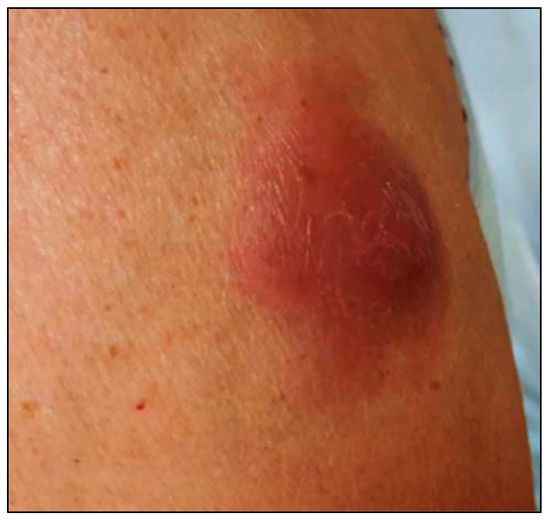
Skin Involvement by Hematological Neoplasms with Blastic Morphology: Lymphoblastic Lymphoma, Blastoid Variant of Mantle Cell Lymphoma and Differential Diagnoses
Source : https://www.mdpi.com/2072-6694/15/15/3928
Hematological neoplasms sharing a blastic morphology may involve the skin. The skin may be either the primary site of occurrence of hematological malignancies with blastic features or cutaneous lesions are...
Conclusions/Relevance: The aim of our paper is to discuss, in detail, the clinical and pathological features of lymphoblastic lymphoma of B- or T-cell origin and mantle cell lymphoma, in particular its aggressive blastoid variant. Although mantle cell lymphoma rarely involves the skin, its blastoid variant is commonly encountered in cutaneous...