



Peripheral leukemia burden at time of apheresis negatively affects the clinical efficacy of CART19 in refractory or relapsed B-ALL
Source : https://www.ncbi.nlm.nih.gov/pmc/articles/PMC8640733/
Our previous clinical study achieved complete remission (CR) rates of >90% following chimeric antigen receptor T cells targeting CD19 (CART19) treatment of refractory/relapsed B cell acute lymphoblastic leukemia (r/r B-ALL);...
Conclusion: Our data imply that PB blasts negatively affected CART19 production and the clinical efficacy of CART19 therapy in patients with r/r B-ALL.

Daratumumab, Carfilzomib, Lenalidomide, and Dexamethasone With Minimal Residual Disease Response-Adapted Therapy in Newly Diagnosed Multiple Myeloma
Source : https://ascopubs.org/doi/10.1200/JCO.21.01935
PURPOSE The MASTER trial combined daratumumab, carfilzomib, lenalidomide, and dexamethasone (Dara-KRd) in newly diagnosed multiple myeloma (NDMM), using minimal residual disease (MRD) by next-generation sequencing (NGS) to inform the use...
Conclusion: Dara-KRd, AHCT, and MRD response-adapted consolidation leads to high rate of MRD negativity in NDMM. For patients with 0 or 1 HRCA, this strategy creates the opportunity of MRD surveillance as an alternative to indefinite maintenance.

Does MRD have a role in the management of iNHL? - PubMed
Source : https://pubmed.ncbi.nlm.nih.gov/34889425/
Among indolent non-Hodgkin lymphomas (iNHLs), the analysis of measurable/minimal residual disease (MRD) has been extensively applied to follicular lymphoma (FL). Treatment combinations have deeply changed over the years, as well...
Conclusion/Relevance: Here, we discuss the evidence on the role of molecular monitoring in the management of FL. Mature data support the quantification of molecular tumor burden at diagnosis as a tool to stratify patients in risk categories and of MRD evaluation at the end of treatment to predict progression-free survival and overall survival....

Clofarabine added to intensive treatment in adult patients with newly diagnosed ALL: the HOVON-100 trial - PubMed
Source : https://pubmed.ncbi.nlm.nih.gov/34883506/
Clofarabine (CLO) is a nucleoside analogue with efficacy in relapsed/refractory acute lymphoblastic leukemia (ALL). This randomized phase III study aimed to evaluate whether CLO added to induction and consolidation would...
Conclusion/Relevance: We conclude that, despite a higher rate of MRD-negativity, addition of CLO does not improve outcome in adults with ALL, which might be due to increased toxicity. The trial is registered at www.trialregister.nl as NTR2004.
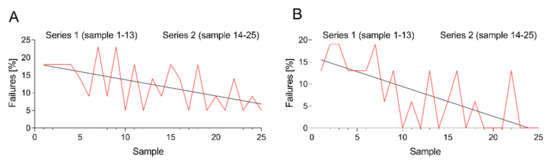
An Extensive Quality Control and Quality Assurance (QC/QA) Program Significantly Improves Inter-Laboratory Concordance Rates of Flow-Cytometric Minimal Residual Disease Assessment in Acute Lymphoblastic Leukemia: An I-BFM-FLOW-Network Report
Source : https://www.mdpi.com/2072-6694/13/23/6148
Monitoring of minimal residual disease (MRD) by flow cytometry (FCM) is a powerful prognostic tool for predicting outcomes in acute lymphoblastic leukemia (ALL). To apply FCM-MRD in large, collaborative trials,...
Conclusion/Relevance: Overall, our extensive education and quality control program improved inter-laboratory concordance rates of FCM-MRD assessments and ultimately led to a very high conformity of risk estimates in independent patient cohorts.