


The prognostic and therapeutic potential of HO-1 in leukemia and MDS - Cell Communication and Signaling
Source : https://biosignaling.biomedcentral.com/articles/10.1186/s12964-023-01074-8
Background Heme oxygenase-1 (HO-1), a heme-degrading enzyme, is proven to have anti-apoptotic effects in several malignancies. In addition, HO-1 is reported to cause chemoresistance and increase cell survival. Growing evidence...
Conclusion: HO-1 has great potential in determining the prognosis of leukemia and MDS patients. HO-1 induces resistance to several chemotherapeutic agents as well as tyrosine kinase inhibitors and following its inhibition, chemo-sensitivity increases. Moreover, the exact role of HO-1 in Chronic Lymphocytic Leukemia (CLL) is yet unknown. While...

Baseline PET radiomics outperform the IPI risk score for prediction of outcome in diffuse large B-cell lymphoma
Research Article | Jakoba Johanna Eertink, Gerben JC Zwezerijnen, Martijn Heymans, Simone Pieplenbosch, Sanne Elisabeth Wiegers, Ulrich Dührsen, Andreas Hüttmann, Lars Kurch, Christine Hanoun, Pieternella J. Lugtenburg, Sally Barrington, N....
Conclusions/Relevance: The clinicalPET model that was developed in the HOVON-84 dataset remained predictive of outcome in 6 independent first-line DLBCL studies, and had higher model performance than the currently used IPI in all studies.
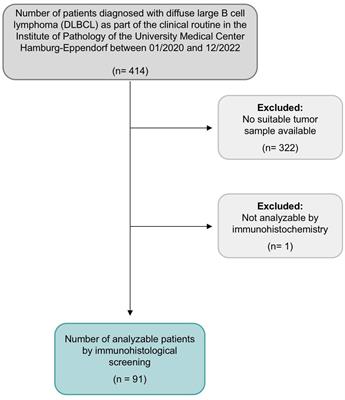
NTRK fusion protein expression is absent in a large cohort of diffuse large B-cell lymphoma
Source : https://www.frontiersin.org/articles/10.3389/fonc.2023.1146029/full
BackgroundEven though two NTRK-targeting drugs are available for the treatment of irresectable, metastatic, or progressive NTRK-positive solid tumors, less is known about the role of NTRK fusions in lymphoma.
Conclusion: Our negative result is consistent with the very sparse data existing on NTRK gene fusions in hematologic neoplasms. To date, only a few cases of hematological malignancies have been described in which NTRK-targeting drugs may provide a potential therapeutic agent. Even though NTRK fusion protein expression was not detectable in...

Highly sensitive single tube B-lymphoblastic leukemia/lymphoma minimal/measurable residual disease test robust to surface antigen directed therapy - PubMed
Source : https://pubmed.ncbi.nlm.nih.gov/36999235/
The .gov means it's official. Federal government websites often end in .gov or .mil. Before sharing sensitive information, make sure you're on a federal government site. The site is secure....
Conclusions: The assay allows for sensitive disease detection of B-ALL MRD independent of CD19 and CD22 expression and allows uniform analysis of samples regardless of anti-CD19 and CD22 therapy.

CDK9 inhibition induces epigenetic reprogramming revealing strategies to circumvent resistance in lymphoma - Molecular Cancer
Source : https://molecular-cancer.biomedcentral.com/articles/10.1186/s12943-023-01762-6
Diffuse large B-cell lymphoma (DLBCL) exhibits significant genetic heterogeneity which contributes to drug resistance, necessitating development of novel therapeutic approaches. Pharmacological inhibitors of cyclin-dependent kinases (CDK) demonstrated pre-clinical activity in...
Conclusions/Relevance: CDK9i induces reprogramming of the epigenetic landscape, and super-enhancer driven recovery of select oncogenes may contribute to resistance to CDK9i. PIM and PI3K represent potential targets to circumvent resistance to CDK9i in the heterogeneous landscape of DLBCL.