


Novel CD19 chimeric antigen receptor T cells manufactured next-day for acute lymphoblastic leukemia - Blood Cancer Journal
Source : https://www.nature.com/articles/s41408-022-00688-4
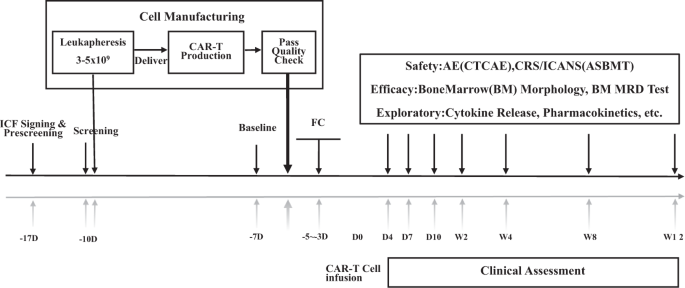
Chimeric antigen receptor-engineered T (CAR-T) cells have shown promising efficacy in patients with relapsed/refractory B cell acute lymphoblastic leukemia (R/R B-ALL). However, challenges remain including long manufacturing processes that need...
Relevance: Chimeric antigen receptor-engineered T (CAR-T) cells have shown promising efficacy in patients with relapsed/refractory B cell acute lymphoblastic leukemia (R/R B-ALL). However, challenges remain including long manufacturing processes that need to be overcome. We presented the CD19-targeting CAR-T cell product GC007F manufactured...

Ectopic expression of a combination of 5 genes detects high risk forms of T-cell acute lymphoblastic leukemia - BMC Genomics
Source : https://bmcgenomics.biomedcentral.com/articles/10.1186/s12864-022-08688-1
Background T cell acute lymphoblastic leukemia (T-ALL) defines a group of hematological malignancies with heterogeneous aggressiveness and highly variable outcome, making therapeutic decisions a challenging task. We tried to discover...
Conclusion: Overall, our investigations led to the discovery of a homogenous group of leukemic cells with profound alterations of their biology. It also resulted in an accurate predictive tool that could significantly improve the management of T-ALL patients.
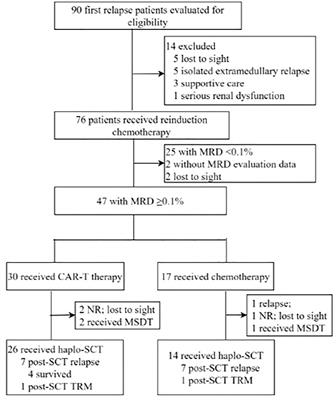
Comparisons of Long-Term Survival and Safety of Haploidentical Hematopoietic Stem Cell Transplantation After CAR-T Cell Therapy or Chemotherapy in Pediatric Patients With First Relapse of B-Cell Acute Lymphoblastic Leukemia Based on MRD-Guided Treatment
Source : https://www.frontiersin.org/articles/10.3389/fimmu.2022.915590/full
Measurable residual disease (MRD) positivity before haploidentical hematopoietic stem cell transplantation (haplo-HSCT) is an independent prognostic factor in determining outcomes in patients with B-cell acute lymphoblastic leukemia (ALL). In this...
Conclusion: Our study suggests that CAR-T therapy effectively eliminates pre-HSCT MRD, resulting in better survival in the context of haplo-HSCT.

Punctual and kinetic MRD analysis from the Fondazione Italiana Linfomi MCL0208 phase III trial in mantle cell lymphoma
Research Article | Simone Ferrero, Daniele Grimaldi, Elisa Genuardi, Daniela Drandi, Gian Maria Zaccaria, Beatrice Alessandria, Marco Ghislieri, Martina Ferrante, Andrea Evangelista, Barbara Mantoan, Gabriele De Luca, Piero Maria Stefani,...
Conclusion: MRD is a powerful predictor over the entire natural history of MCL and suitable for models with continuous adaptation of patient risk.

Prognostic Impact and Phenotype of Residual Acute Myeloid Leukemia Stem Cells - PubMed
Source : https://pubmed.ncbi.nlm.nih.gov/35704721/
Background: Leukemia stem cells (LSCs) have been demonstrated to be more therapy-resistant than leukemic blast cells reflecting measurable residual disease (MRD). CD34+CD38- cell frequency is an independent factor for relapse...
Relevance: Leukemia stem cells (LSCs) have been demonstrated to be more therapy-resistant than leukemic blast cells reflecting measurable residual disease (MRD). CD34 CD38- cell frequency is an independent factor for relapse prediction and could therefore be used in the future to improve MRD assessment in acute myeloid leukemia (AML). This...