



Managing Ibrutinib-Intolerant Patients With B-Cell Malignancies - PubMed
Source : https://pubmed.ncbi.nlm.nih.gov/36723874/
The .gov means it's official. Federal government websites often end in .gov or .mil. Before sharing sensitive information, make sure you're on a federal government site. The site is secure....
Conclusions: Bruton tyrosine kinase (BTK) inhibition has been demonstrated to be a highly effective treatment strategy in patients with B-cell malignancies. Ibrutinib, a first-generation BTK inhibitor, has become a cornerstone treatment; however, up to half of the patients treated with ibrutinib experience off-target effects including atrial...

New and emerging therapies for the treatment of relapsed/refractory diffuse large B-cell lymphoma - PubMed
Source : https://pubmed.ncbi.nlm.nih.gov/35469489/
Diffuse large B-cell lymphoma (DLBCL) is the most common form of aggressive non-Hodgkin lymphoma. Approximately 40% of patients with DLBCL will experience disease relapse or will be refractory to first...
Conclusions: Preemptive TDF therapy in HBsAg-positive patients with DLBCL receiving R-CHOP chemotherapy was safe and effective for preventing HBV-related hepatitis. However, a long-term maintenance strategy of preemptive TDF therapy should be recommended because of the relatively high rate of HBV-related hepatitis after withdrawal from TDF.

Leukemic stem cells and therapy resistance in acute myeloid leukemia - PubMed
Source : https://pubmed.ncbi.nlm.nih.gov/36722405/
A major obstacle in the treatment of acute myeloid leukemia (AML) is refractory disease or relapse after achieving remission. The latter arises from a few therapy-resistant cells within minimal residual...
Conclusions: Overall, there is increasing evidence for patient-specific approaches that address individual therapeutic vulnerabilities. An inevitable strategy to prevent AML recurrence and improve clinical outcome in the future is the integration of LSC-targeting agents into first-line treatments which may lead to a decrease in relapse...
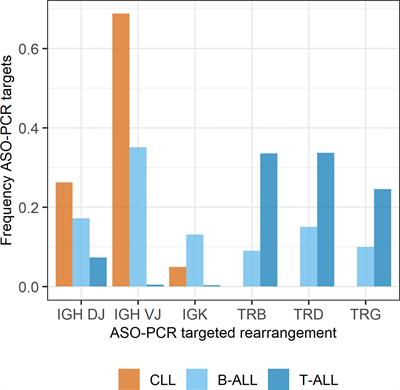
Patient specific real-time PCR in precision medicine - Validation of IG/TR based MRD assessment in lymphoid leukemia
Source : https://www.frontiersin.org/articles/10.3389/fonc.2022.1111209/full
Detection of patient- and tumor-specific clonally rearranged immune receptor genes using real-time quantitative (RQ)-PCR is an accepted method in the field of precision medicine for hematologic malignancies. As individual primers...
Conclusions: Our results demonstrate that comprehensive technical performance level validation according to regulatory requirements can also be achieved for the patient specific ASO-PCR approach.
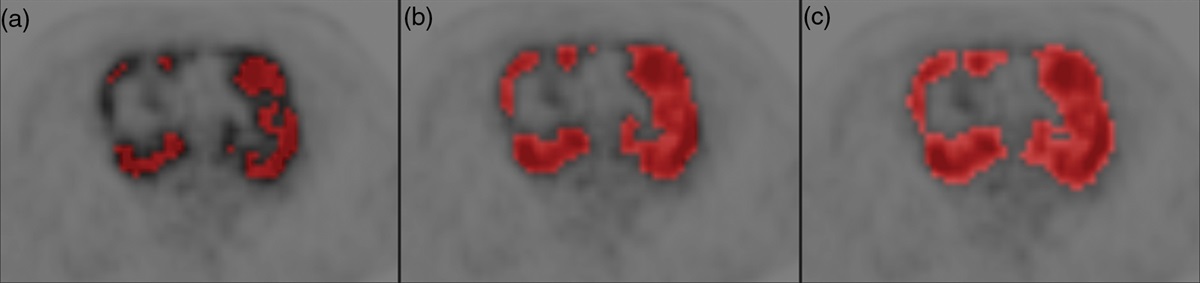
Prognostic parameters on baseline and interim... : Nuclear Medicine Communications
We investigated baseline volumetric values [metabolic tumor volume (MTV) and total lesion glycolysis (TLG), also normalized for body weight] segmented with three different methods [>SUV4 (glob4); 41% isocontour (41pc), and...
Conclusions: Baseline MTV and TLG values and optimal cutoff points achieved with different segmentation methods varied markedly and showed a limited prognostic impact. Interim PET/CT parameters provided more accurate prognostic information with semiquantitative ‘Deauville-like’ parameters performing best in the present study.