
Multiple Myeloma Connect
  • Saved
2L management of RRMM

Multiple myeloma patients who have received at least two prior therapies including lenalidomide and a proteasome inhibitor and have demonstrated progression on/within 60 days of completion of the last therapy may benefit from pomalidomide plus dexamethasone.

In the phase 2, single-arm MM-014 trial of DPd (pomalidomide + dexamethasone + daratumumab), patients with RRMM who received 1 or 2 prior treatment lines demonstrated an ORR of nearly 78.6% in the ITT population. The complete response (CR) was 26.8%; very-good partial response (VGPR), 25.9%; PR, 25.9%.

In other results, patients who relapsed after taking lenalidomide or who were refractory to lenalidomide had an ORR of 81.5% and 77.6%, respectively. As for secondary outcomes, median PFS was 23.7 months in the ITT population and median OS was 56.7 months. Overall, 8.9% of patients discontinued secondary to adverse events.

What is your treatment threshold to proceed to 2L therapy? How do you determine whether to dose adjust medications or change therapy altogether?

  • 2yr
    DPD with the above data is an option, and DKD - the carfilzomib-based regimen is also an option. It all depends on the patient's situation, what prior regimes the patient Show More
  • 2yr
    So with patients on maintenance once levels start going up just by adjusting dose usually buys 6 months on an average. Hence during that time need to start preparing and Show More
Show More Comments

  • Saved
Lipid Metabolic Vulnerabilities of Multiple Myeloma

Lipid Metabolic Vulnerabilities of Multiple Myeloma

Source : https://link.springer.com/article/10.1007/s10238-023-01174-2

Multiple myeloma (MM) is the second most common hematological malignancy worldwide, characterized by abnormal proliferation of malignant plasma cells within a tumor-permissive bone marrow microenvironment.

Understanding the oncogenic mechanisms of lipid metabolism and targeting lipid metabolism reprogramming to identify new MM dependencies have important scientific significance and holds potential for clinical translation.

  • Saved
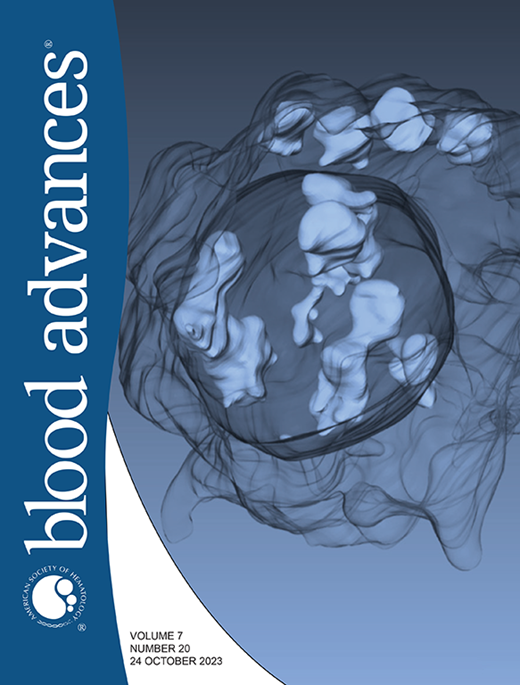
More Intensive Therapy Has a Better Effect for Frail Patients With Multiple Myeloma

More Intensive Therapy Has a Better Effect for Frail Patients With Multiple Myeloma

Source : https://ashpublications.org/bloodadvances/article/7/20/6275/497455/More-intensive-therapy-has-a-better-effect-for

VRd is superior to Rd in veterans with myeloma, and the evidence of benefit is strongest in those with the highest levels of frailty.

Net benefit of VRd over Rd in US veterans newly diagnosed with MM is strongest in patients with the highest levels of frailty, countering historical recommendations to consider doublets in this population.

  • Saved
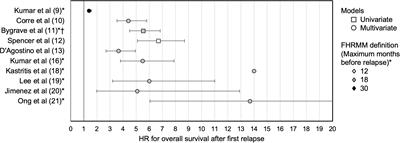
Definers and Drivers of Functional High-Risk Multiple Myeloma: Insights From Genomic, Transcriptomic, and Immune Profiling

Definers and Drivers of Functional High-Risk Multiple Myeloma: Insights From Genomic, Transcriptomic, and Immune Profiling

Source : https://www.frontiersin.org/journals/oncology/articles/10.3389/fonc.2023.1240966/full

Traditional prognostic models for newly diagnosed patients with multiple myeloma (MM), including International Staging System criteria and number of high-risk chromosomal abnormalities, are based on disease characteristics at diagnosis. However,...

In this review, we explore potential definitions of FHRMM before delving into its underlying drivers based on genetic, transcriptomic, and immune cell profiling studies. Emerging data suggest that specific features of both myeloma cells and immune cells can enable the FHRMM phenotype.

  • Saved
Immunomodulatory Properties of CD38 Antibodies and Their Effect on Anticancer Efficacy in Multiple Myeloma

Immunomodulatory Properties of CD38 Antibodies and Their Effect on Anticancer Efficacy in Multiple Myeloma

Source : https://pubmed.ncbi.nlm.nih.gov/37840445/

Resistance mechanisms that undermine the immunomodulatory effects of CD38-targeting therapies can be tumor intrinsic, such as the downregulation of CD38 surface expression and expression of complement inhibitor proteins, and immune...

Resistance mechanisms to CD38 antibodies include tumor intrinsic mechanisms such as the downregulation of CD38 expression and alternative splicing of CD38 to prevent binding with antibodies, as well as immune microenvironment resistance mechanisms that include the change in NK-cell phenotype over the course of the disease.