




Multiple Myeloma Connect
  • Saved
Clinical Usefulness of Transjugular Liver Biopsy in Patients With Hematological Diseases With Liver Dysfunction - PubMed

Clinical Usefulness of Transjugular Liver Biopsy in Patients With Hematological Diseases With Liver Dysfunction - PubMed

Source : https://pubmed.ncbi.nlm.nih.gov/34917436/

Introduction Transjugular liver biopsy (TJLB) is indicated for patients in whom percutaneous liver biopsy is contraindicated, such as those with hematological diseases complicated by liver dysfunction. However, the clinical utility...


Conclusion: The etiology of liver disorders in patients with hematological diseases varies widely. Therefore, histological diagnosis using TJLB is useful to determine an appropriate therapeutic strategy for underlying hematological diseases.

  • 4yr
    Key Points • Source: Cureus • Conclusion/Relevance: “The etiology of liver disorders in patients with hematological diseases varies widely. Therefore, histological diagnosis using TJLB [transjugular liver biopsy] is useful to determine an appropriate therapeutic Show More
  • Saved
The mRNA Expression and Regulation of Glucocorticoid Receptor Isoforms Associated with Response of Multiple Myeloma Treated with a Glucocorticoids-Dependent Regimen of Dexamethasone, Bortezomib and Thalidomide - PubMed

The mRNA Expression and Regulation of Glucocorticoid Receptor Isoforms Associated with Response of Multiple Myeloma Treated with a Glucocorticoids-Dependent Regimen of Dexamethasone, Bortezomib and Thalidomide - PubMed

Source : https://pubmed.ncbi.nlm.nih.gov/34921034/

Our findings raise the possibility that low expression of GRα and HSP90 plays important roles in nonresponders. Lack of HSP90 might affect GR structure and further take part in nonresponse....


Conclusion: Our findings raise the possibility that low expression of GRα and HSP90 plays important roles in nonresponders. Lack of HSP90 might affect GR structure and further take part in nonresponse. SRp30c and SRp40 mRNA expression both showed significant positive correlation with GRα. That might become new targets for treatment of...

  • Saved
Feasibility of artificial intelligence-supported assessment of bone marrow infiltration using dual-energy computed tomography in patients with evidence of monoclonal protein - a retrospective observational study - European Radiology

Feasibility of artificial intelligence-supported assessment of bone marrow infiltration using dual-energy computed tomography in patients with evidence of monoclonal protein - a retrospective observational study - European Radiology

Source : https://link.springer.com/article/10.1007/s00330-021-08419-2

Objectives To demonstrate the feasibility of an automated, non-invasive approach to estimate bone marrow (BM) infiltration of multiple myeloma (MM) by dual-energy computed tomography (DECT) after virtual non-calcium (VNCa) post-processing....


Conclusions: Automated, AI-supported attenuation assessment of the spine in DECT VNCa is feasible to predict BM infiltration in MM. Further, the proposed method might allow for pre-selecting patients with higher pre-test probability of osteolytic bone lesions and support the clinical diagnosis of MM without pathognomonic lesions on conventional...

  • Saved
Impact of COVID-19 in patients with multiple myeloma based on a global data network - Blood Cancer Journal

Impact of COVID-19 in patients with multiple myeloma based on a global data network - Blood Cancer Journal

Source : https://www.nature.com/articles/s41408-021-00588-z

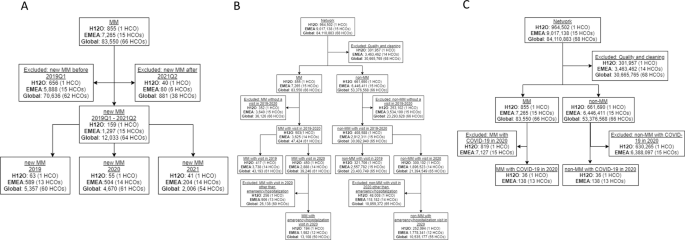
The COVID-19 pandemic has represented a major cause of morbidity/mortality worldwide, overstressing health systems. Multiple myeloma (MM) patients show an increased risk for infections and they are expected to be...


Conclusion/Relevance: By interrogating large EMR datasets from HCO in Europe and globally, we confirmed that MM patients have been more severely impacted by COVID-19 pandemic than non-MM patients. This study highlights the necessity of extending preventive measures worlwide to protect vulnerable patients from SARS-CoV-2 infection by promoting...

  • 4yr
    Key Points • Source: Blood Cancer Journal • Conclusion/Relevance: “By interrogating large EMR datasets from HCO [health-care organizations] in Europe and globally, we confirmed that MM patients have been more severely impacted by COVID-19 Show More
  • Saved

made a Post

Immunotherapy Advances in Multiple Myeloma

The introduction of monoclonal antibodies to treat multiple myeloma (MM) is a major immunotherapy breakthrough. The most recent advances include the 2021 FDA approval of belantmab mafodotin-blmf, which is an anti-BCMA monoclonal antibody that is bispecific and binds to B-cell maturation antigen (BCMA). The next approval was idecabtagene vicleucel, a B-cell maturation antigen (BCMA)-directed chimeric antigen receptor (CAR)-T cell immunotherapy. These treatments are indicated for adults with relapsed or refractory multiple myeloma after four or more prior lines of therapy including an immunomodulatory agent, a proteasome inhibitor, and anti-CD38 monoclonal antibody. Some experts, however, anticipate utility in earlier lines of MM treatment. Others have expressed concern that use of these agents earlier in treatment could expose the patient to targeted antigens relatively early and thus impact retreatment with an immune-based treatment approach later on.

Moving forward, what role do you see for newly approved immunotherapies in the treatment of MM? What benefits/risks do you think these agents will offer? How do you counsel your patients on these immunotherapies?

https://www.ncbi.nlm.nih.gov/pmc/articles/PMC8534104/
https://www.nature.com/articles/s41587-021-00929-0
https://bloodcancerdiscov.aacrjournals.org/content/2/5/423
https://www.fda.gov/drugs/resources-information-approved-drugs/fda-granted-accelerated-approval-belantamab-mafodotin-blmf-multiple-myeloma
https://www.ashclinicalnews.org/spotlight/charting-myeloma-immunotherapy-landscape/

  • 4yr
    Thanks, All, for the wonderful and insightful feedback! What are your thoughts about the potential for these agents used earlier in MM treatment negatively impacting retreatment with later immunotherapy?
  • 4yr
    The exact sequence unfortunately not known. It is nice to see the potential of have to see what the trials show as to where to sequence it. likely Show More

Show More Comments