



Mechanism of action of Asparagus officinalis extract against multiple myeloma using bioinformatics tools, in silico and in vitro study
Source : https://www.frontiersin.org/articles/10.3389/fphar.2023.1076815/full
Introduction: Asparagus (Asparagus officinalis) is a perennial flowering plant species. Its main components have tumor-prevention, immune system-enhancement, and anti-inflammation effects. Network pharmacology is a powerful approach that is being applied...
Discussion: In this study, the anti-cancer activity of asparagus against MM was demonstrated using network pharmacology, and potential pharmacological mechanisms were inferred using in vitro experimental data.
Liquid biopsies and minimal residual disease in lymphoid malignancies - PubMed
Source : https://pubmed.ncbi.nlm.nih.gov/37228488/
Minimal residual disease (MRD) assessment using peripheral blood instead of bone marrow aspirate/biopsy specimen or the biopsy of the cancerous infiltrated by lymphoid malignancies is an emerging technique with enormous...
Conclusion: Liquid biopsy for MRD testing using blood is rapidly evolving in the field of lymphoid malignancies. Most advancement is seen in the evaluation, management and in the post-therapy monitoring of ALL leading to routine clinical utilization. Liquid biopsy based MRD testing in common non-Hodgkin’s lymphoma such as diffuse large B...
Current Main Topics in Multiple Myeloma - PubMed
Source : https://pubmed.ncbi.nlm.nih.gov/37190132/
Multiple Myeloma (MM) remains a difficult to treat disease mainly due to its biological heterogeneity, of which we are more and more knowledgeable thanks to the development of increasingly sensitive...
Conclusions/Relevance: In this review, we will focus on the main points regarding risk stratification, treatment and monitoring of MM, highlighting the most recent evidence that could modify the management of this still incurable disease.
Derivation and validation of a novel score for early prediction of severe CRS after CAR-T therapy in haematological malignancy patients: A multi-centre study - PubMed
Source : https://pubmed.ncbi.nlm.nih.gov/37192741/
Chimeric antigen receptor T (CAR-T) cell therapy is highly effective in inducing complete remission in haematological malignancies. Severe cytokine release syndrome (CRS) is the most significant and life-threatening adverse effect...
Relevance: We developed a nomogram that can predict which patients are likely to develop severe CRS before they become critically ill, improving our understanding of CRS biology, and may guide future cytokine-directed therapies.
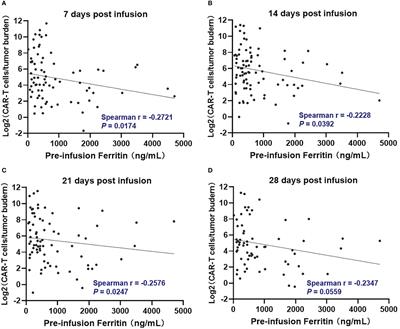
A combination of pre-infusion serum ferritin, CRP and IL-6 predicts outcome in relapsed/refractory multiple myeloma patients treated with CAR-T cells
Source : https://www.frontiersin.org/articles/10.3389/fimmu.2023.1169071/full
BackgroundChimeric antigen receptor - T (CAR-T) cell therapy has shown remarkable efficacy in patients with relapsed/refractory multiple myeloma (R/R MM). However, a subset of patients still experienced progression or relapse,...
Conclusions: Our results suggest that patients with elevated inflammation markers before CAR-T cell infusion are more likely to have poor prognosis.