

Prostate Cancer Connect
  • Saved

made a Post

How would you manage this patient with signs/symptoms of prostate cancer?

A 63-year-old man presents with the chief complaint of gross hematuria. Patient history includes 30+ pack years of smoking, coronary artery disease, and mild lower urinary tract symptoms including nocturiaX3, decrease in the force and caliber of his urine stream, and frequent urination. His medications include a statin and 81mg of aspirin. The physical examination reveals moderate obesity with a BMI of 29. The digital rectal exam reveals a prostate gland estimated to be 45 grams. His previous PSA was 2.4ng/dl.

What would be your next steps in managing this patient?

  • 4yr
    gross hematuria evaluation: urine culture to start and if negative for infection, then PSA, CBC, CMP followed by CT urogram (if normal renal function and no contrast allergy) followed by Show More
  • 4yr
    Hematuria in this 63 yo man is cancer until proven otherwise. I would check a CT scan of abdomen/pelvis (kidney protocol,) check a PSA, CBC, CMP and Show More

Show More Comments

  • Saved

made a Post

How would you manage this patient with signs/symptoms of prostate cancer?

A 63-year-old man presents with the chief complaint of gross hematuria. Patient history includes 30+ pack years of smoking, coronary artery disease, and mild lower urinary tract symptoms including nocturiaX3, decrease in the force and caliber of his urine stream, and frequent urination. His medications include a statin and 81mg of aspirin. The physical examination reveals moderate obesity with a BMI of 29. The digital rectal exam reveals a prostate gland estimated to be 45 grams. His previous PSA was 2.4ng/dl.


What would be your next steps in managing this patient?


  • 4yr
    gross hematuria evaluation: urine culture to start and if negative for infection, then PSA, CBC, CMP followed by CT urogram (if normal renal function and no contrast allergy) followed by Show More
  • 4yr
    Hematuria in this 63 yo man is cancer until proven otherwise. I would check a CT scan of abdomen/pelvis (kidney protocol,) check a PSA, CBC, CMP and Show More

Show More Comments

  • Saved
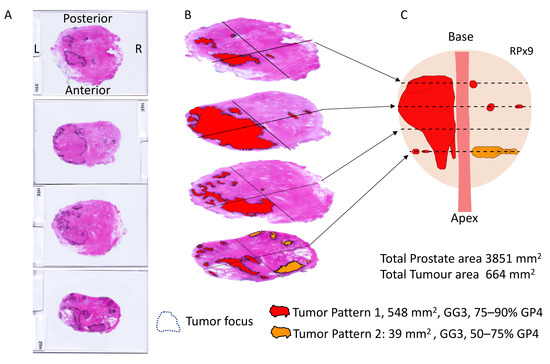
The Urine Biomarker PUR-4 Is Positively Associated with the Amount of Gleason 4 in Human Prostate Cancers

The Urine Biomarker PUR-4 Is Positively Associated with the Amount of Gleason 4 in Human Prostate Cancers

Source : https://www.mdpi.com/2075-1729/11/11/1172

The Prostate Urine Risk (PUR) biomarker is a four-group classifier for predicting outcome in patients prior to biopsy and for men on active surveillance. The four categories correspond to the...


Conclusion/Relevance: These observations shed light on the biological significance of the PUR biomarker and support its use as a non-invasive means of assessing the presence of clinically significant prostate cancer.

  • Saved
An analysis of three different prostate cancer risk calculators applied prior to prostate biopsy: A Turkish cohort validation study - PubMed

An analysis of three different prostate cancer risk calculators applied prior to prostate biopsy: A Turkish cohort validation study - PubMed

Source : https://pubmed.ncbi.nlm.nih.gov/34837424/

The study aimed to investigate the best-performing of three risk calculators (RCs) for the Turkish population in predicting cancer-free status and high-risk prostate cancer (PCa) in patients undergoing transrectal ultrasound-guided...


Conclusion/Relevance: The study results show that PBCG-RC performed before biopsy has a higher predictive power than the other two RCs.

  • Saved
Evaluation of 18 F-PSMA-1007 PET/CT in prostate cancer patients with biochemical recurrence after radical prostatectomy - PubMed

Evaluation of 18 F-PSMA-1007 PET/CT in prostate cancer patients with biochemical recurrence after radical prostatectomy - PubMed

Source : https://pubmed.ncbi.nlm.nih.gov/34837847/

18 F-PSMA-1007 PET/CT demonstrated a high detection rate for patients with a raised PSA level after radical prostatectomy even in patients with extremely low PSA level (eg. PSA level ≤0.5...


Conclusion/Relevance: 18F-PSMA-1007 PET/CT demonstrated a high detection rate for patients with a raised PSA level after radical prostatectomy even in patients with extremely low PSA level (eg. PSA level ≤0.5 ng/mL), which was essential for further clinical management for PCa patients.