


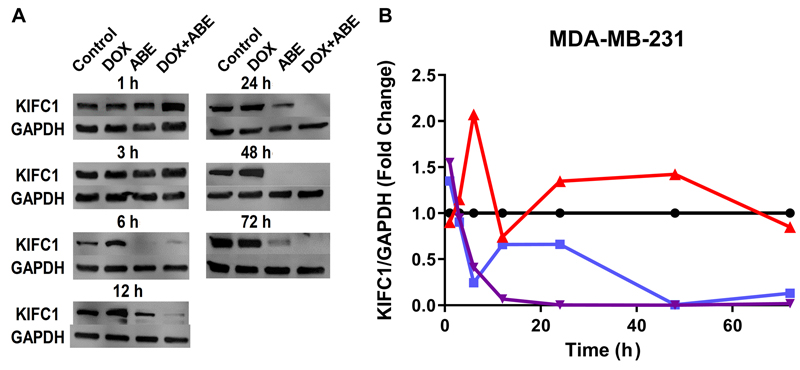
KIFC1: A Reliable Prognostic Biomarker in Rb-positive Triple-negative Breast Cancer Patients Treated With Doxorubicin in Combination With Abemaciclib
Source : https://www.cancerdiagnosisprognosis.org/?p=2485
Triple-negative breast cancer (TNBC) is a breast cancer (BC) subtype characterized by the lack of the three hallmark receptors: estrogen receptor (ER), progesterone receptor (PR), and human epidermal growth factor...
Conclusion:Change in KIFC1 expression is primarily driven by ABE in Rb-positive TNBC cells. DOX increases ABE speed to achieve a full inhibition of KIFC1 in Rb-positive, yet, without influencing its expression in Rb-negative TNBC cells.
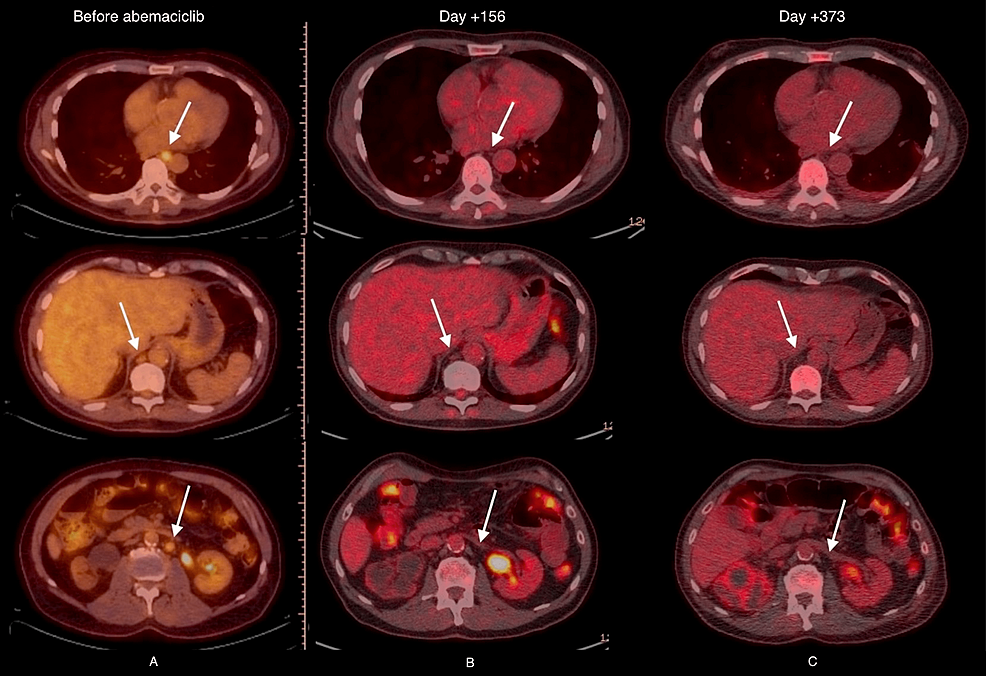
Efficacy of Abemaciclib in the Management of Refractory Metastatic Extramammary Paget's Disease
Published systemic therapy options for metastatic extramammary Paget's disease have largely been anecdotal due to the rarity of this disease, which has precluded the ability to conduct clinical trials. We...
Relevance: Published systemic therapy options for metastatic extramammary Paget's disease have largely been anecdotal due to the rarity of this disease, which has precluded the ability to conduct clinical trials. We describe the favorable response of a 72-year-old man with extramammary Paget's disease, whose disease has been controlled with the...

Pertuzumab study in the neoadjuvant setting for HER2-positive nonmetastatic breast cancer in Australia (PeRSIA) - PubMed
Source : https://pubmed.ncbi.nlm.nih.gov/36005450/
The pertuzumab study in the neoadjuvant setting for HER2+ nonmetastatic breast cancer in Australia (PeRSIA-ML39622) is an analysis of safety and effectiveness data from the pertuzumab patient registry. Although the...
Conclusion/Relevance: Our study is the first to capture real-world data on the use of pertuzumab in the neoadjuvant setting in Australia. The effectiveness and safety data are consistent with those reported in clinical trials of pertuzumab in patients with HER2 breast cancer, with no new safety concerns.
-
Albert Dekker3yrnot sure how relevant that is for US. This is clearly example that socialized medicine is at least 5 year behind
Resistance to CDK4/6 inhibition: Mechanisms and strategies to overcome a therapeutic problem in the treatment of hormone receptor-positive metastatic breast cancer
Source : https://www.sciencedirect.com/science/article/abs/pii/S0167488922001380?via=ihub
Palbociclib, ribociclib and abemaciclib are selective CDK4/6 inhibitors, approved for HR+, HER2-, advanced or metastatic breast cancer * Various mechanisms of primary ( de novo) or acquired resistance to CDK4/6...
Relevance: This review presents the currently available knowledge on the mechanisms of resistance to CDK4/6 inhibitors, explores possible treatment strategies that could overcome this therapeutic problem, and summarizes relevant recent clinical trials.
-
Albert Dekker3yrclearly not sufficient for this important class of agents
-
Breast Cancer Connect3yrKey Points • Source: Biochimica et Biophysica Acta (BBA) - Molecular Cell Research • Conclusion/Relevance: “This review presents the currently available knowledge on the mechanisms of resistance to CDK4/6 inhibitors, explores possible treatment strategies Show More

Steviol glycosides affect functional properties and macromolecular expression of breast cancer cells - PubMed
Source : https://pubmed.ncbi.nlm.nih.gov/36054915/
Steviol glycosides, the active sweet components of stevia plant, have been recently found to possess a number of therapeutic properties, including some recorded anticancer ones against various cancer cell types...
Conclusion: The above data clearly demonstrate that steviol glycosides have different effects on breast cancer cells according to their ER status, suggesting that steviol glycosides might be examined for their potential anticancer activity against breast cancer, especially triple negative breast cancer (TNBC).