

Participation in community-based healthcare interventions and non-communicable diseases early detection of general population in Indonesia
Source : https://www.sciencedirect.com/science/article/pii/S2352827322002154?via=ihub
CBHIs are a distinct mode of healthcare delivery and are regarded as a critical component of healthcare task-sharing in LMICs. * CBHIs have the potential to address LMICs' health system...
Conclusion and Recommendation: CBHIs may benefit NCDs early detection for the general population in Indonesia. Policymakers and health practitioners need to design CBHIs programs that are attractive to the population, especially men and younger people.
Anti-breast cancer drugs targeting cell-surface glucose-regulated protein 78: a drug repositioning in silico study - PubMed
Source : https://pubmed.ncbi.nlm.nih.gov/36129131/
Breast cancer (BC) is prevalent worldwide and is a leading cause of death among women. However, cell-surface glucose-regulated protein 78 (cs-GRP78) is overexpressed in several types of cancer and during...
Conclusion: These findings demonstrate the efficacy of abemaciclib, ribociclib, and tunicamycin in binding to the nucleotide-binding domain of the GRP78, paving the way for elucidating the mode of interactions between these drugs and cancer (and other stressed) cells that overexpress GRP78.
Clinico-Immunological Effects of a Single-Agent CDK4/6 Inhibitor in Advanced HR+/HER2- Breast Cancer Based on a Window of Opportunity Study - PubMed
Source : https://pubmed.ncbi.nlm.nih.gov/36135204/
1 Department of Biology and Biochemistry, University of Bath, Bath BA2 7 AY, UK. 2 Department of Biostatistics and Epidemiology, Gustave Roussy, Paris-Saclay University, 91190 Gif-sur-Yvette, France. 3 Department of...
Conclusions: Our study strongly supports the notion that CDK4/6 inhibitors induce tumour immune modulation. N/L ratio and platelet levels decreased due to treatment. Future studies should test whether patients would benefit from immunomodulators in association with CDK4/6 agents in a larger clinical trial. Moreover, the CDK4/6-induced immune...

Bias Against International Medical Graduates in the Hematology/Oncology Fellowship Recruitment Process: Findings From a Nationwide Survey of Fellowship Program Directors
Source : https://ascopubs.org/doi/full/10.1200/OP.22.00219
One quarter of all practicing physicians in the United States and over one third of all US hematologists and oncologists are international medical graduates (IMGs). IMGs are defined as physicians...
Relevance: One quarter of all practicing physicians in the United States and over one third of all US hematologists and oncologists are international medical graduates (IMGs). IMGs are defined as physicians who have graduated from a medical school outside the United States and Canada, a population that includes US citizens and permanent...
-
Albert Dekker3yrnothing unexpected
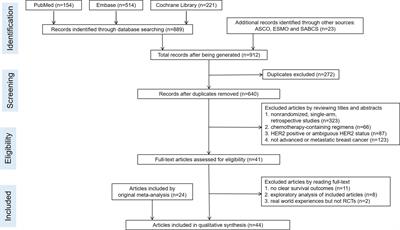
CDK4/6 inhibitors versus PI3K/AKT/mTOR inhibitors in women with hormone receptor-positive, HER2-negative metastatic breast cancer: An updated systematic review and network meta-analysis of 28 randomized controlled trials
Source : https://www.frontiersin.org/articles/10.3389/fonc.2022.956464/full
BackgroundUpdated evidence was required to compare the efficacy and safety of cyclin-dependent kinases 4 and 6 (CDK4/6) inhibitors and phosphatidylinositol 3-kinase (PI3K)/protein kinase B (AKT)/mammalian target of rapamycin (mTOR) inhibitors...
Conclusions: CDK4/6 inhibitors showed better efficacy in PFS, but the benefits disappeared when taking treatment line into consideration. Specific and discrepant safety profiles were found in two categories of agents.
-
Albert Dekker3yrthis very interesting and rather intriguing. In my mind patients should get either one depending on particular circumstances