



New Developments in Systemic Management for High-Risk Early-Stage Hormone-Receptor-Positive, HER2-Negative Breast Cancer - PubMed
Source : https://pubmed.ncbi.nlm.nih.gov/37060423/
For high-risk early-stage hormone-receptor-positive, HER2-negative breast cancer (HR + /HER2 - EBC), short- and long-term recurrence risks remain substantial despite local control with surgery and radiation and systemic treatment with...
Conclusions/Relevance: Given the remaining recurrence risk even with these interventions and with the ongoing development of new strategies for HR + disease, patients with high-risk EBC should be encouraged to participate in clinical trials, such as trials of immunotherapy, novel oral estrogen receptor alpha (ERα)-targeting agents,...

Observational study of HR+/HER2− metastatic breast cancer patients treated with abemaciclib in Spain in the Named Patient Use Program (AbemusS) - Clinical and Translational Oncology
Source : https://link.springer.com/article/10.1007/s12094-023-03159-9
Introduction/objectives To describe abemaciclib use in patients with hormone receptor-positive, human epidermal growth factor receptor-negative (HR+/HER2−) metastatic breast cancer (mBC) who participated in the Named Patient Use program (NPU) in...
Conclusion: These results suggest that abemaciclib is effective, as monotherapy and in combination, for patients with heavily pretreated mBC, consistent with clinical trial results.
-
Albert Dekker3yrMay not be applicable in US as patients here are treated in the more intensive fashion than in EU

Are you treating ypN0 patient with adjuvant abemaciclib? - PubMed
Source : https://pubmed.ncbi.nlm.nih.gov/37079950/
The .gov means it's official. Federal government websites often end in .gov or .mil. Before sharing sensitive information, make sure you're on a federal government site. The site is secure....
Conclusions/Relevance: These considerations highlight the need for a proper clinical staging on locoregional lymph nodes at the diagnosis of disease and the importance of looking for cytological confirmation of all suspect nodes. All these additional criteria shall be stressed and spread to avoid missing any patient that could benefit from an...
-
Albert Dekker3yrI don't and I find the compound difficult in adjuvant setting
Controlling cell proliferation by targeting cyclin-dependent kinase 6 using drug repurposing approach
Source : https://www.sciencedirect.com/science/article/abs/pii/S1876162323000123?via=ihub
Cyclin-dependent kinase 6 (CDK6) is an essential kinase in cell cycle progression, which is a viable target for inhibitors in various malignancies, including breast cancer. This study aimed to virtually...
Conclusions/Relevance: The selected two compounds are small molecules in the appropriate druglikeness range. The results observed in molecular docking and molecular dynamics simulations were most promising for two compounds, suggesting their potent inhibitory effect against CDK6. We propose that these candidate compounds can undergo in vitro...
-
Albert Dekker3yrhopefully agents will make to clinical practice fast
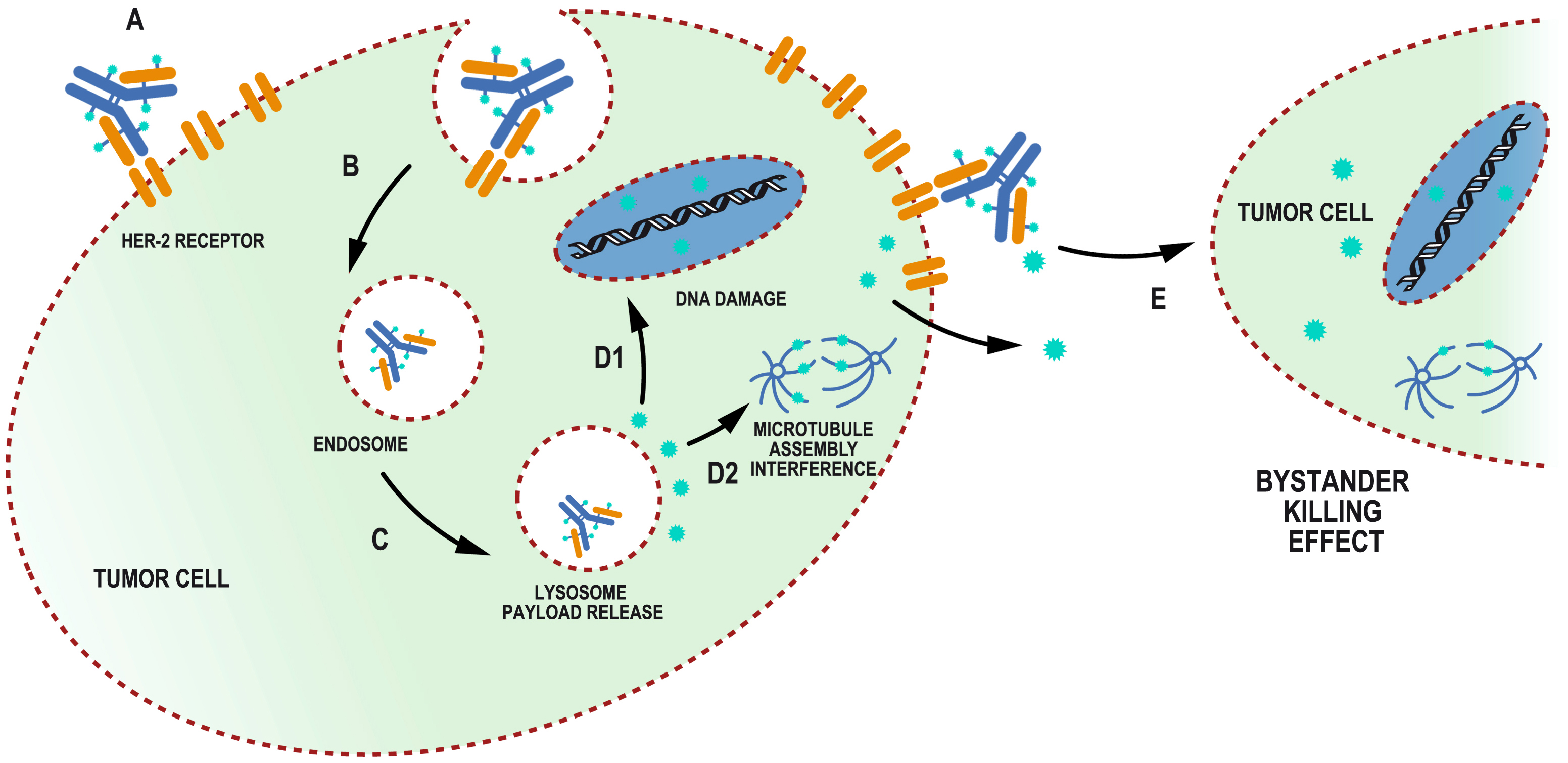
The change of paradigm in the treatment of HER2-positive breast cancer with the development of new generation antibody-drug conjugates
Source : https://cdrjournal.com/article/view/5386
Human epidermal growth factor receptor 2 protein (HER2)-positive breast cancer is an aggressive disease that accounts for approximately 15%-20% of the total breast cancer cases worldwide. Most of these cases...
Conclusions/Relevance: Advances in the design of antibody-drug conjugates have led to the development of new generation drugs with enhanced properties, such as trastuzumab deruxtecan and trastuzumab duocarmazine, which are significantly changing the paradigm in the treatment of HER2-positive metastatic breast cancer.
-
Albert Dekker3yrclearly new ADC are very effective