



Single-Cell Transcriptomics Provide Insight into Metastasis-Related Subsets of Breast Cancer
Source : https://breast-cancer-research.biomedcentral.com/articles/10.1186/s13058-023-01728-y
Breast cancer metastasis is a complex, multi-step process, with high cellular heterogeneity between primary and metastatic breast cancer, and more complex interactions between metastatic cancer cells and other cells in...
This study takes single-cell analysis as the first perspective to deeply explore special or rare cell subpopulations related to breast cancer metastasis, systematically summarizes their functions, molecular features, and corresponding treatment strategies, which will contribute to accurately identify, understand, and target tumor...
-
Albert Dekker2yrrecent classification changes make it more confusing than helpful

Association Between NDRG1 Protein Expression and Aggressive Features of Breast Cancer: a Systematic Review and Meta-Analysis
Source : https://bmccancer.biomedcentral.com/articles/10.1186/s12885-023-11517-7
Background N-myc downstream-regulated gene-1 (NDRG1) is well-described as a potent metastasis suppressor, but its role in human breast cancer remains controversial and unclear. Therefore, the present study utilized a systematic...
The study concluded that increased NDRG1 protein expression was associated with increased metastasis of the tumor to the axillary lymph node. Additionally, increased NDRG1 protein expression was observed in Her2-negative breast cancer, suggesting its role in both less aggressive and more aggressive behavior depending on breast cancer...
-
Albert Dekker2yrdoes anyone know if this gene is a part of oncotypeDX or similar panels?

AXL - A New Player in Resistance to HER2 Blockade
Source : https://pubmed.ncbi.nlm.nih.gov/37864955/
HER2 is a driver in solid tumors, mainly breast, oesophageal and gastric cancer, through activation of oncogenic signaling pathways such as PI3K or MAPK. HER2 overexpression associates with aggressive disease...
Preclinical studies show that AXL drives anti-HER2 resistance and metastasis through dimerization with HER2 and activation of downstream pathways in breast cancer. Moreover, AXL inhibition restores response to HER2 blockade in vitro and in vivo.
-
Albert Dekker2yrthis is not new but not clear how management may be changed
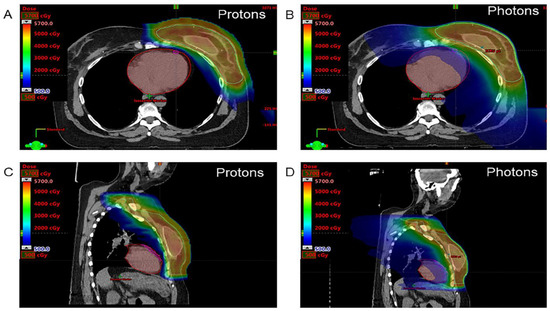
Detection of Early Myocardial Dysfunction by Imaging Biomarkers in Cancer Patients Undergoing Photon Beam vs. Proton Beam Radiotherapy: A Prospective Study
Source : https://www.mdpi.com/2308-3425/10/10/418
1. Background: We sought to determine acute and subacute changes in cardiac function after proton beam (PBT) and photon beam (PhT) radiotherapy (RT) using conventional and two-dimensional speckle tracking echocardiography...
Patients who underwent PhT but not PBT had reduced tissue Doppler velocities and SRe values during follow-up, suggesting early myocardial relaxation abnormalities. PBT shows promise as a cardiac-sparing RT technology.
-
Albert Dekker2yrnot clear how that will work in the real life

Abemaciclib as adjuvant treatment for high-risk early breast cancer
Source : https://www.sciencedirect.com/science/article/pii/S1130634323003367?via=ihub
Adaptar el informe GHEMA de abemaciclib, un inhibidor de quinasas dependientes de ciclinas 4 y 6, con autorización de la Agencia Europea del Medicamen...
The selection of a pharmacological alternative must be supported by criteria of scientific evidence and efficiency. The evaluation and selection of drugs, carried out according to their therapeutic value and incremental clinical benefit, allows their positioning in the therapeutic care guidelines and protocols so that patients receive the...