



Optimizing Postneoadjuvant Treatment in Patients With Early Breast Cancer Achieving Pathologic Complete Response
Source : https://pubmed.ncbi.nlm.nih.gov/38569132/
pCR should be integrated with other prognostic factors to optimize postneoadjuvant treatments in BC.
Although it is associated with a common excellent prognosis, partial CR after neoadjuvant therapy for breast cancer does not fully depict patient outcomes.
-
Albert Dekker2yrvery challenging situation with few clinical trials these days having enough arms to thorough evaluate benefits of different treatment options or no treatment at all
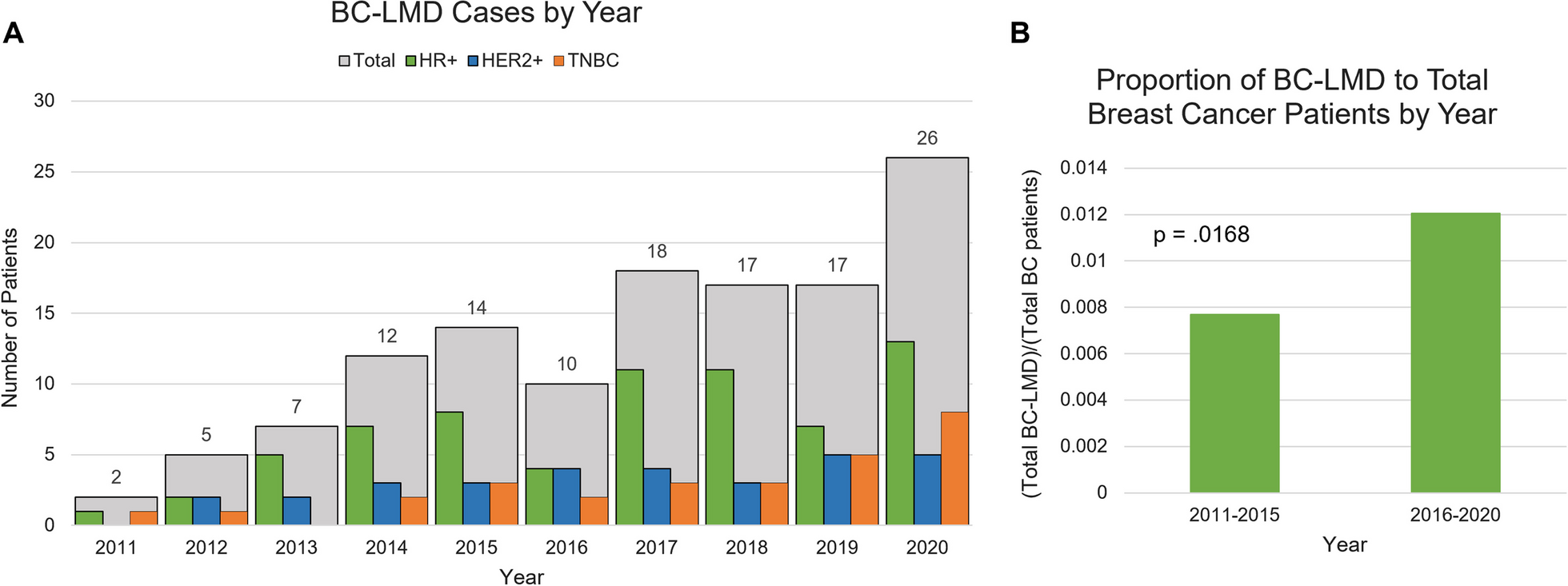
Factors Associated With Overall Survival in Breast Cancer Patients With Leptomeningeal Disease (LMD): a Single Institutional Retrospective Review
Source : https://breast-cancer-research.biomedcentral.com/articles/10.1186/s13058-024-01789-7
Background Breast cancer-related leptomeningeal disease (BC-LMD) is a dire diagnosis for 5-8% of patients with breast cancer (BC). We conducted a retrospective review of BC-LMD patients diagnosed at Moffitt Cancer...
Systemic therapy, intrathecal therapy, and whole-body radiotherapy was associated with prolonged survival for all patients.
-
Albert Dekker2yrUnfortunately, terribly frequently end stage disease
There was no benefit of aspirin 300 mg/day on breast cancer recurrence and survival rates.
-
Albert Dekker2yrTrue but it will definitely increase involvement in ones own care and decision to make other healthy choices

Datopotamab Deruxtecan in Advanced or Metastatic HR+/HER2– and Triple-Negative Breast Cancer: Results From the Phase I TROPION-PanTumor01 Study
Source : https://pubmed.ncbi.nlm.nih.gov/38652877/
In patients with heavily pretreated advanced HR+/HER2- BC and TNBC, Dato-DXd demonstrated promising clinical activity and a manageable safety profile. Dato-DXd is currently being evaluated in phase III studies.
Median PFS rates in patients with hormone receptor positive/human epidermal growth factor receptor 2 negative breast cancer and triple-negative breast cancer were 8.3 and 4.4 months, respectively.
-
Albert Dekker2yrI think that is applicable to all ADC; question which one offers best benefit to risk ratio
The overall frequency of pathogenic or likely pathogenic CDH1 variants was 1.5% and was associated with age ≤45 years at lobular breast cancer diagnosis and positive family history of breast cancer.
-
Albert Dekker2yrI think the more we learn the more mild variants and the incomplete penetrance we will find