


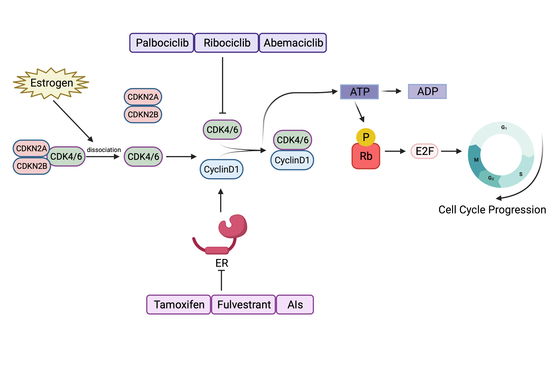
Resistance to CDK4/6 Inhibitors in Estrogen Receptor-Positive Breast Cancer
Source : https://www.mdpi.com/1422-0067/22/22/12292/htm
Estrogen receptor-positive (ER+) breast cancer is the most common form of breast cancer. Antiestrogens were the first therapy aimed at treating this subtype, but resistance to these warranted the development...
Conclusion/Relevance: CDK4/6 inhibitors are a relatively new class of drugs that are very effective in improving the response of ER breast cancer patients. There are many more aspects about them that need to be further evaluated in the clinic to allow CDK4/6 inhibitors to reach their full potential in breast cancer treatment.

The risk of cancer in patients with primary Sjögren syndrome; A single-center study from Turkey - PubMed
Source : https://pubmed.ncbi.nlm.nih.gov/34800937/
The risk of hematological and solid cancers was higher in the patients with pSS when compared to general population. In our pSS cohort, the risk for ovarian cancer was found...
Conclusion:The risk of hematological and solid cancers was higher in the patients with pSS when compared to general population. In our pSS cohort, the risk for ovarian cancer was found to be increased, which has not been previously reported in the literature.
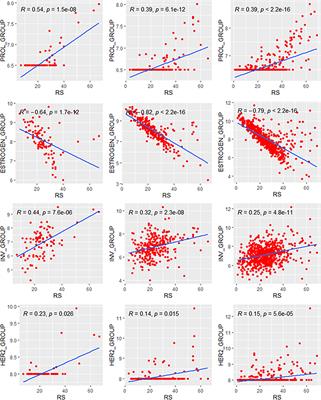
Impact of Different Modules of 21-Gene Assay in Early Breast Cancer Patients
Source : https://www.frontiersin.org/articles/10.3389/fendo.2021.759338/full
BackgroundThe 21-gene assay recurrence score (RS) provides additional information on recurrence risk of breast cancer patients and prediction of chemotherapy benefit. Previous studies that examined the contribution of the individual...
Conclusion: RS was primarily driven by the estrogen module regardless of age, but the proliferation module had a stronger impact on RS in younger patients. The impact of modules varied in patients with different genetic and clinical risks.

Plasma D-Dimer and Fibrinogen Levels Correlates with Tumor Size and Disease Progression in Nigerian Breast Cancer Patients
Source : https://oncologynation.com/journal/62680
Oncology Nation is the leading online medical community exclusively for Oncologists and Hematologists enabling specialized consultation, communication, and information exchange within a private and secure platform.
From this study we can infer that elevated D-dimer and fibrinogen levels suggest a worsening of the disease, a later clinical stage, and a greater likelihood of tumor metastasis, thus both markers can be used as an auxiliary index for the staging and prognostication of breast cancer. Two recent reviews validate this position.

Possible Breast Cancer Risk Related to Background Parenchymal Enhancement at Breast MRI: A Meta-Analysis Study
Source : https://oncologynation.com/journal/61947
Oncology Nation is the leading online medical community exclusively for Oncologists and Hematologists enabling specialized consultation, communication, and information exchange within a private and secure platform.
Moderate or high-risk BPE is related to a higher risk of breast cancer. BPE may be used as a stratification variable in interventional studies. Also, increase the use of breast MRI for breast cancer screening and diagnosis make data on BPE more available to detect the possibility of risk of breast cancer and opposing the possible negative...